
Last updated November 15, 2026
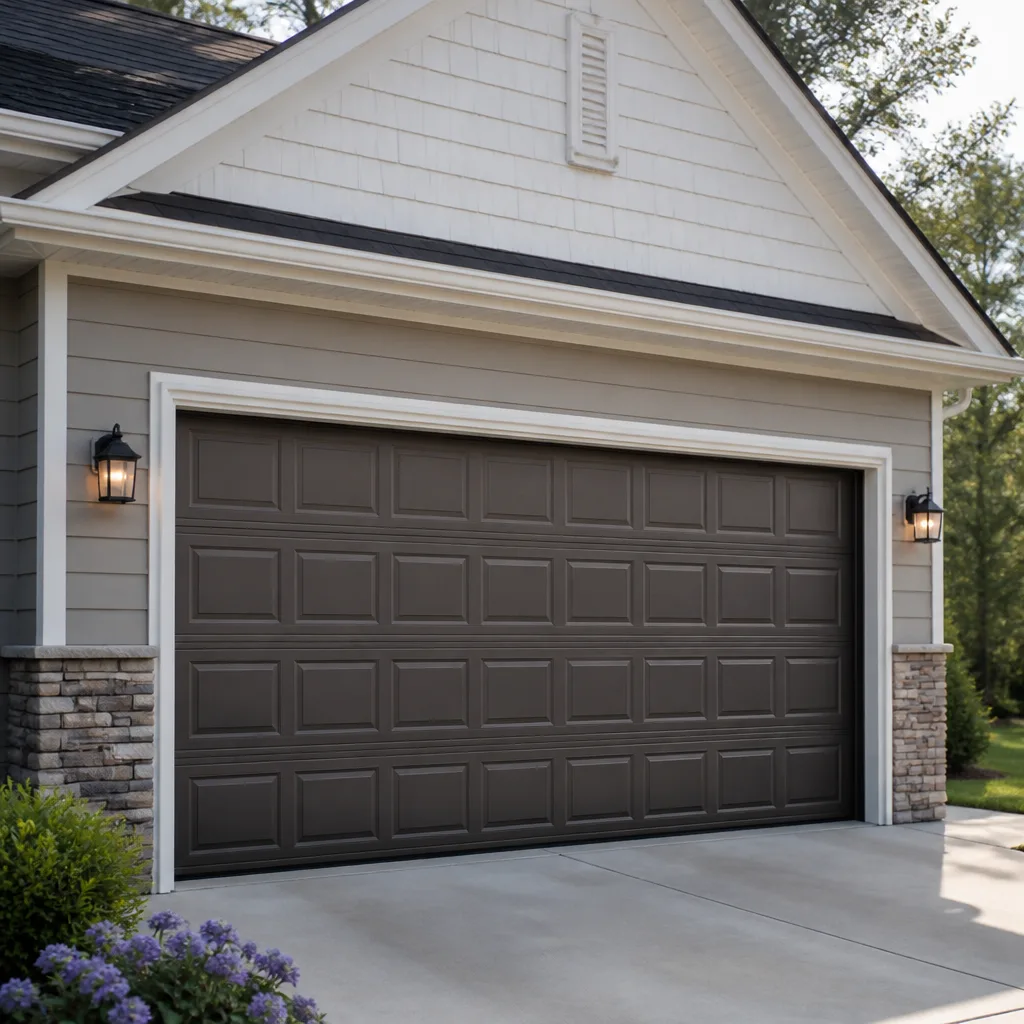 Raised-panel steel
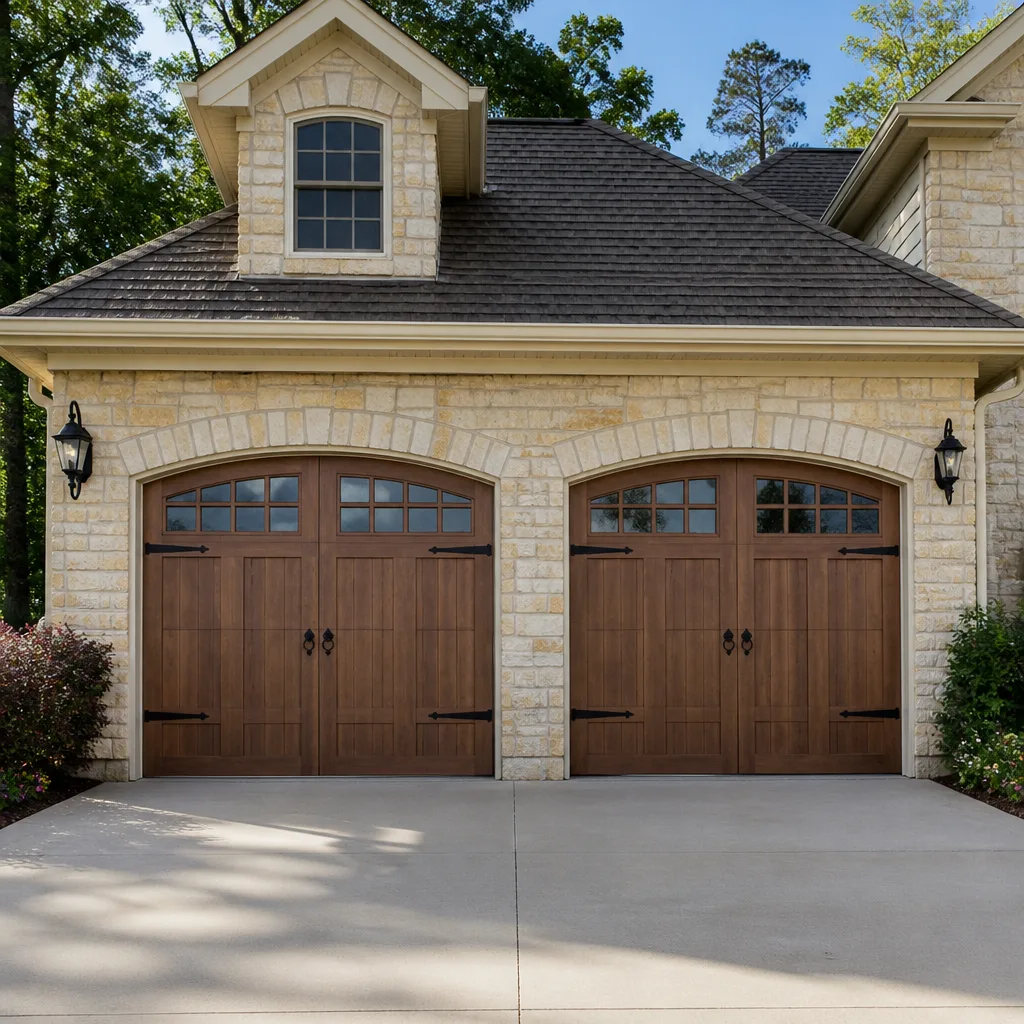 Carriage house
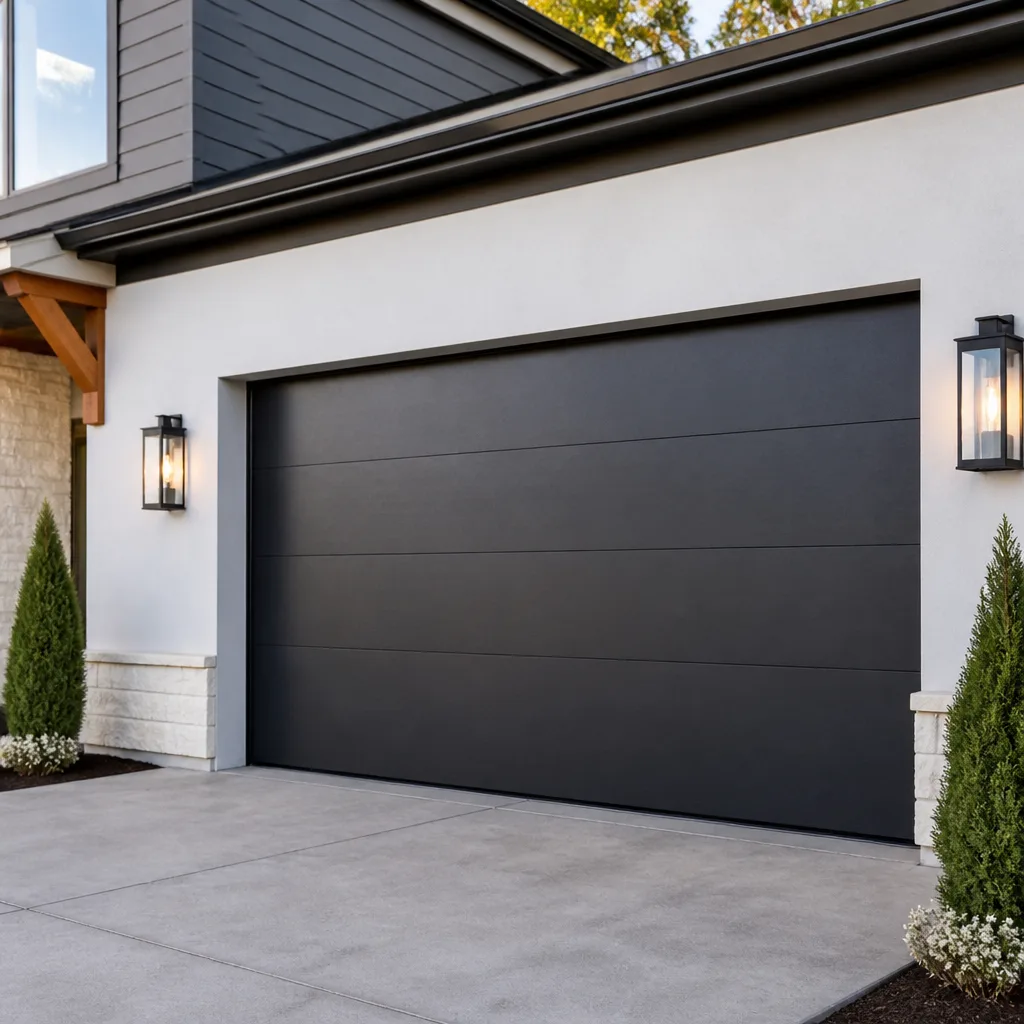 Modern flush
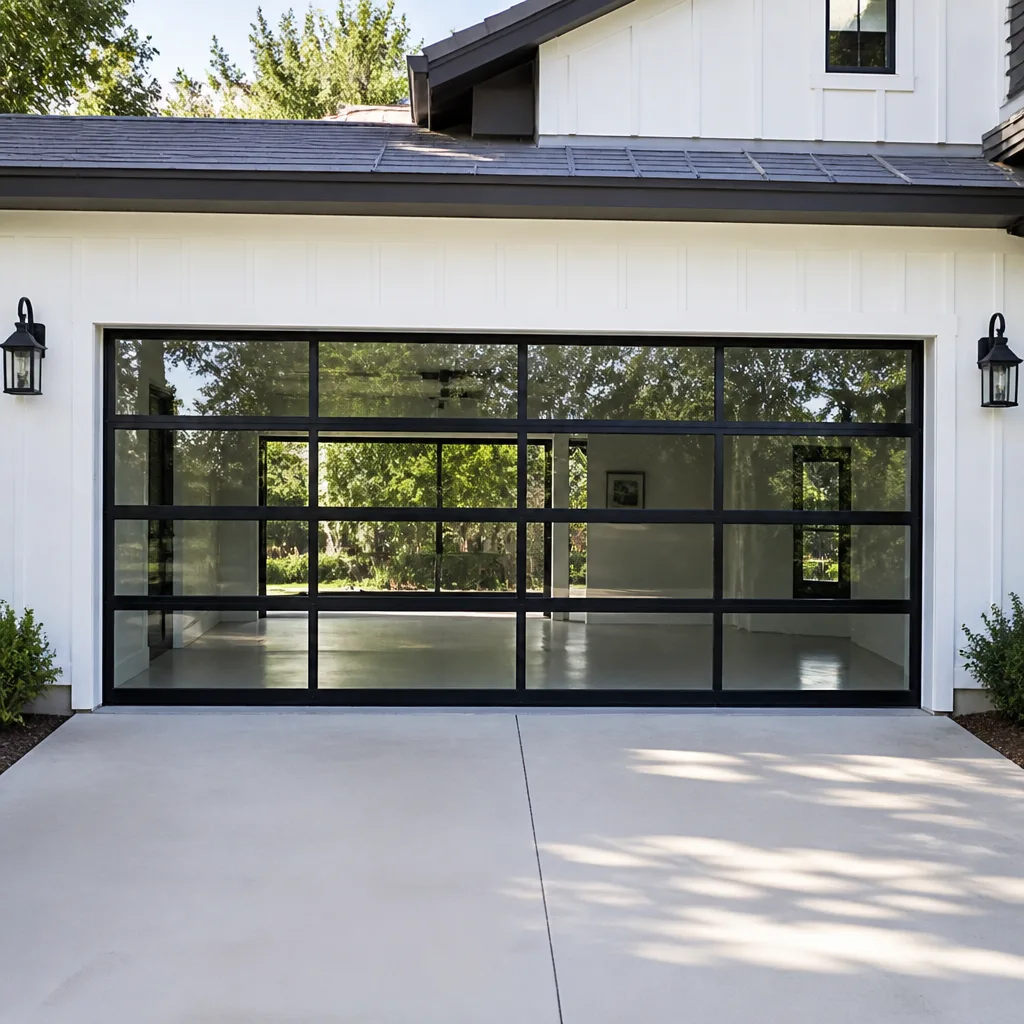 Full-view glass
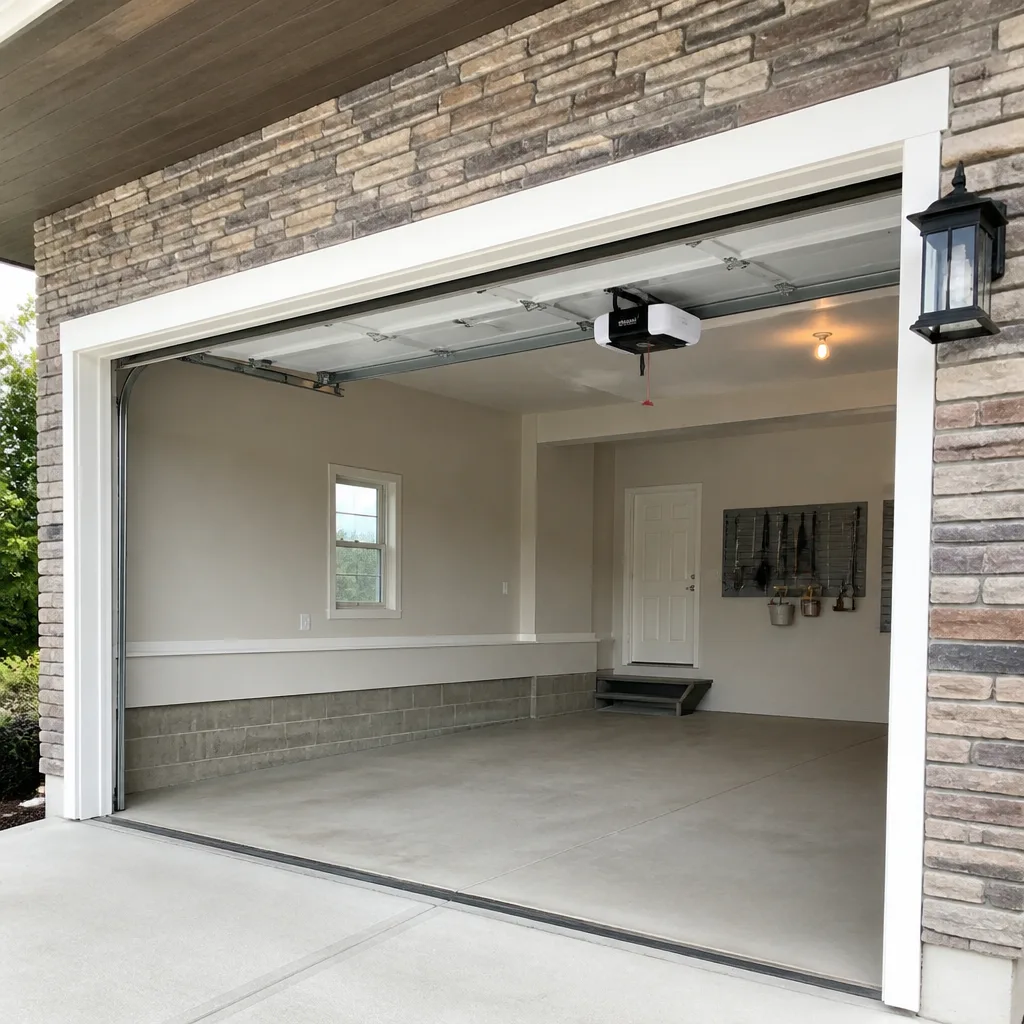 LiftMaster openers
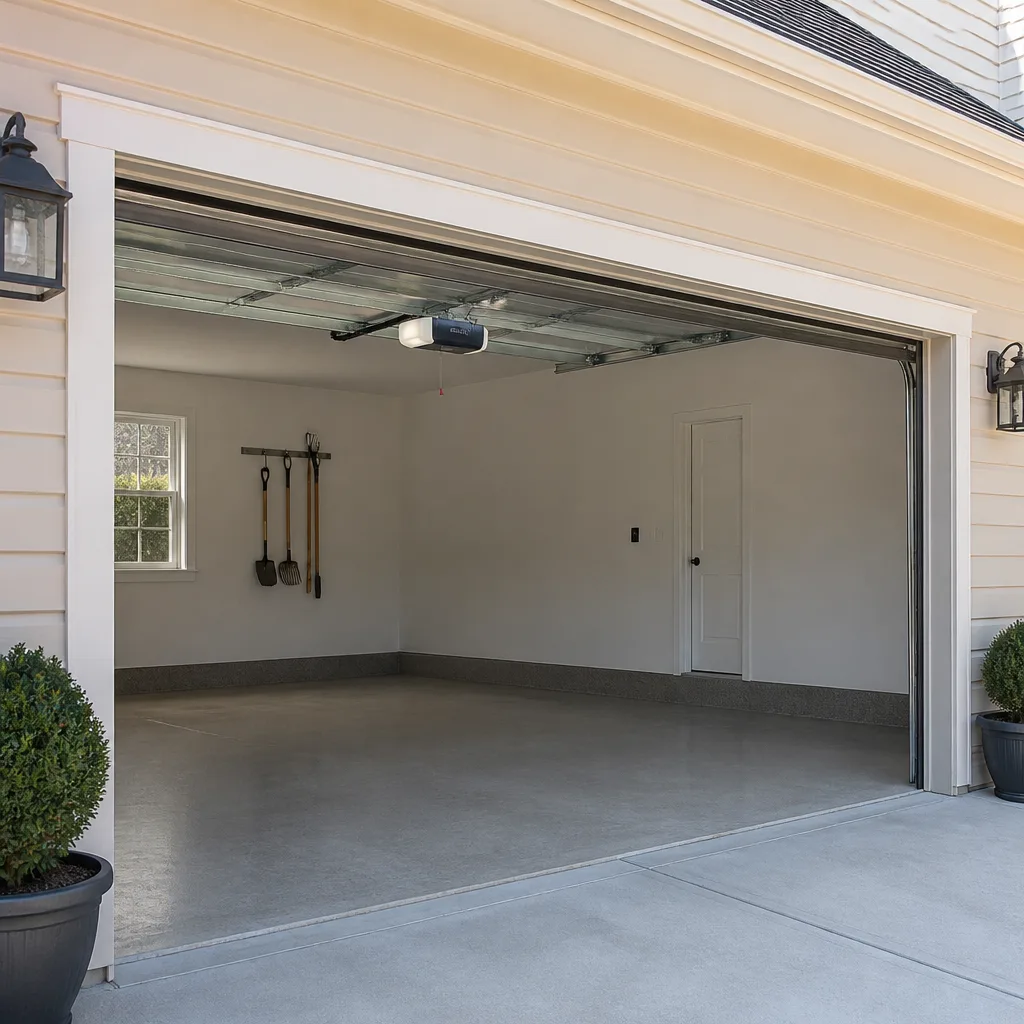 Chamberlain openers
Full 25-point door and opener safety check with every visit - springs, cables, rollers, tracks, and your LiftMaster or Chamberlain opener included
You get a price before we start. It does not change when the pro arrives.
Get your free estimateGarage Door Emergency Preparedness Guide for Glendale Homes
Most homeowners treat their garage door as a switch: press the button, it opens, you leave. Then the power drops during a summer monsoon, the opener hesitates in triple-digit heat, or a dust storm coats the safety sensors, and the switch stops working. The surprise isn’t the failure itself; it’s discovering, in the dark or in the middle of a driveway, that you don’t actually know how to get the door open by hand or what to check first. This guide covers the three emergencies we see most often in Glendale homes, the manual release procedure that trips people up under stress, and the pre-season kit and contact protocol worth setting up before you need them.
Quick Answer
A garage door emergency in Glendale almost always traces back to one of three things: a power outage that leaves the opener dead, an opener motor that stalls in extreme summer heat, or safety sensors fouled by dust or debris. For each, there’s a specific first response, a manual release you should know how to use, and an emergency kit of four low-cost items that fixes most of them without a service call. Learn those before the failure happens and you’ll rarely be locked out of your own garage.
Styles & brands we work with
- Raised-panel steel
- Carriage house
- Modern flush
- Full-view glass
- LiftMaster openers
- Chamberlain openers
Table of Contents
- The Three Garage Door Emergencies That Hit Glendale Homes
- Power Outage: How to Get In and Out Safely
- Manual Release by Opener Type: Where People Get Stuck
- Re-securing the Door After the Power Returns
- Door Stuck Mid-Travel in Extreme Heat
- Dust Storm Sensor Fouling and What to Check
- The Four-Item Monsoon Emergency Kit
- Setting Up Your 24-Hour Contact Protocol
- Common Mistakes to Avoid
- When to Call a Professional
The Three Garage Door Emergencies That Hit Glendale Homes
Garage door failures in Glendale don’t happen at random times and in random ways. They cluster. When the monsoon rolls through and the power goes out across a neighborhood, we field calls from the same zip codes within hours of each other. When the thermometer pushes past 110 degrees for a stretch, opener motors that were already marginal start stalling mid-travel. When a dust storm moves through the Valley, safety sensors get coated and doors reverse or refuse to close.
Those are the three predictable events:
- Monsoon power outages. These are the ones that strand people. An outage that lasts hours means the opener is dead, the door is heavy, and if the homeowner doesn’t know the manual release, the car stays in and the family stays out.
- Extreme heat opener failures. Garage interiors in Glendale run hotter than outdoor air, and a motor that’s approaching the end of its life is more likely to trip its internal thermal protection when the ambient temperature is high. The symptom is usually a door that opens partway and stops, or an opener that clicks but does nothing.
- Dust storm sensor fouling. The photo-eye sensors at the bottom of the door track are sensitive to a thin coating of dust. When they can’t see each other, the door reverses the moment it breaks the beam on the way down, which reads as “my door won’t close” and frustrates people who assume something is broken.
Knowing which of the three you’re in narrows your response immediately. A dead opener after a power cut doesn’t require you to touch a single wire; it requires a manual release and a flashlight. A door that opens halfway in July heat needs a different set of checks. A door that reverses on the way down needs a rag and thirty seconds. If you’d rather have a technician diagnose and repair the door itself, our garage door repair team handles all three scenarios routinely.
Power Outage: How to Get In and Out Safely
A power outage is the most common reason a Glendale homeowner can’t get their car out of the garage. The door itself isn’t broken; the opener is simply dead. The correct response is to use the manual release, lift the door by hand, secure it, and wait. Doing it in the right order matters, because a door that’s been improperly disconnected can come down hard.
Here’s the sequence:
- Unplug the opener motor first. Before you touch the release cord, kill power to the opener at the wall switch or by pulling the plug. When the electricity returns unexpectedly, you don’t want the motor firing while you’re standing under the door.
- Locate the manual release cord. It hangs from the trolley near the center of the door on the opener rail, usually with a red handle. In the dark, feel your way along the rail; a flashlight helps.
- Pull the handle toward the door (not straight back) to disengage the trolley. The exact pull angle matters and is discussed below by opener type.
- Lift the door slowly by hand. A properly balanced door opens with moderate effort. If it won’t lift without straining, don’t force it; it’s a sign of a spring problem that needs a technician.
- Secure the door before you walk away. Prop it fully open and don’t leave it hanging partway. A door that slips back down while the trolley is disconnected has nothing stopping it.
- Get the car out. Exit at normal pace. If the door is going to stay open for some time, brace it with a sturdy support so a breeze can’t drop it.
One safety note worth repeating: don’t touch the springs, cables, or brackets at any point in this sequence. Those components store enormous force and are not a homeowner repair. The manual release handles the motor, not the mechanical door. Our garage door opener repair service exists precisely because the opener side and the mechanical side have to work together, and disconnecting one to fix the other is where people injure themselves.
Manual Release by Opener Type: Where People Get Stuck
Nearly every residential opener in Glendale homes uses some version of the same trolley-and-release design, but the details differ enough between brands that fumbling in the dark is common. If you know which brand is on your ceiling, you know which quirk to expect. A quick look at the motor housing before an emergency is worth the thirty seconds; you’re likely to find one of the eight brands we’re factory-familiar with, including LiftMaster, Chamberlain, Genie, and Clopay, so reading the label now saves confusion later.
The most common points of confusion:
- LiftMaster and Chamberlain (chain or belt drive). The release cord hangs from a trolley that’s held in place by a spring-loaded lever. The lever needs to be pulled straight down and slightly toward the door; pulling sideways can bind it. If the trolley won’t release, the lever is usually holding tension from the carriage being at the wrong spot on the rail. Try cycling the door button once before disengaging.
- Genie screw-drive openers. The carriage on a screw drive uses a different release arm than chain-driven units, and the release cord sometimes hangs closer to the header. Pulling the cord at the same angle you’d use on a LiftMaster can cause the carriage to jam against the screw. Straight down is the right direction here.
- Clopay doors paired with belt-drive openers. The door brand and the opener are separate components, and the manual release on a belt-drive trolley is often lighter than on a chain. It’s easy to yank too hard and pull the cord free from the trolley entirely, which strands the door open with the motor still engaged. A firm, steady pull is right; a fast jerk is not.
If you’ve pulled the cord and the door still won’t budge, don’t keep pulling. Either the trolley is stuck under tension from the motor, or the door’s own balance system is at fault. In either case, calling a technician is the faster path than fighting with it. If you’ve already forced it and the cord or trolley looks damaged, we fix those regularly as part of our Pearl Garage Door Repair service line.
Re-securing the Door After the Power Returns
When the lights come back on, don’t just press the remote and walk away. The door has been moved out of the opener’s known position, and the trolley needs to reconnect properly before the motor can be trusted again. Skipping this step is how people end up with a bent opener rail or a stripped gear.
- Close the door fully by hand with the trolley still disconnected, and make sure it’s seated on the floor.
- Restore power to the opener and listen for the calibration chirp or click that confirms the unit is live.
- Press the wall button once to run the opener through a partial cycle. When the trolley carriage meets the door arm, it should re-engage with an audible click. If it doesn’t, run the opener one more time; the carriage needs to travel to the point where it locks in.
- Test the safety reverse by waving an object through the photo-eye beam while the door is closing. It should reverse immediately.
- Run the door through two full open-and-close cycles and watch the travel limits. If it stops short on either end or reverses for no reason, the limits may need adjustment; that’s a small opener repair most homeowners can avoid by calling us.
If the door, once reconnected, sounds rougher than it did before the outage, or the opener struggles to lift it, the outage may have been a straw on a camel that was already leaning. We diagnose that scenario at no charge in Glendale; a free estimate tells you whether it needs a repair or whether the opener was always going to fail on the next hot day.
Door Stuck Mid-Travel in Extreme Heat
A door that stops partway up in the middle of July is usually not the door’s fault; it’s the opener protecting itself. Many modern openers have a thermal cutout that trips when the motor reaches a high internal temperature, and a garage interior in Glendale in summer can run well above outdoor air. The door isn’t broken; it’s overheated. The good news is the fix is patience, not a repair.
The wrong move here is forcing the door open or closed by hand while the motor is still engaged. Trying to overpower an engaged opener is what snaps cables and bends door sections, and a snapped cable turns a small repair into a bigger one. If the opener has tripped thermal protection, you won’t be able to force the door past it anyway, because the trolley is still engaged with the carriage.
What to do in the moment:
- Wait it out. Give the opener 20 to 30 minutes to cool and try the wall button again. If it runs, you’ve confirmed a heat-related thermal trip and know what to do next time.
- Don’t keep pressing the button. Each press resets the internal timer and slows the cool-down. Let it rest.
- If the door is 6 inches off the floor and the car is inside, use the manual release (opener unplugged first), then lift it by hand and secure it.
- If it stops mid-travel repeatedly in the same spot regardless of temperature, the travel limits or a failing gear are more likely than heat. That’s an opener repair, not an emergency; schedule it during a cool morning.
We work on Genie, LiftMaster, Chamberlain, and other widely installed openers, and heat-related limit drift is one of the routine diagnoses in Glendale. If you’re seeing this happen multiple times per summer, the opener is telling you something.
Dust Storm Sensor Fouling and What to Check
After a dust storm, the number one cause of a “broken” garage door in Glendale is a pair of photo-eye sensors that can’t see each other through a thin coat of dust. The door goes down a few inches, hits the invisible beam between the sensors, and reverses. To the homeowner, it looks like the door is malfunctioning. It’s actually doing exactly what it’s designed to do, protecting anyone underneath.
The fix, in most cases, is a two-minute check:
- Find the sensors. They’re small lensed units mounted on the tracks near the floor, one on each side, facing each other.
- Wipe both lenses with a soft cloth. A dry microfiber or even a paper towel takes the dust off. Don’t spray cleaner directly into the sensor; mist the cloth first if you need to.
- Check that each sensor’s LED is steady. A blinking LED on one side means the two aren’t aligned. Gently nudge the bracket until the light goes solid.
- Check for any debris in the beam path. A rake handle leaning against the track, a basketball, a fallen yard sign – anything in the line of sight will trigger a reversal.
- Test the reverse. Close the door and break the beam with your foot; it should reverse without hesitating.
If the lenses are clean, the LEDs are solid, and the door still reverses, the issue is more likely in the wiring or the opener’s logic board. That’s where a technician is worth the visit; a quick diagnostic at no charge in Glendale tells you whether it’s a sensor, a wire, or something in the opener itself. Our team is factory-familiar with brands like Chamberlain and Genie, so the diagnosis is usually quick.
The Four-Item Monsoon Emergency Kit
The four low-cost items that resolve the majority of storm-related garage door problems, without a service call, live in a single bin on a shelf near the door. Putting them together takes less than five minutes and costs less than a takeout dinner. If you do nothing else in this guide, do this before the monsoon season starts in Glendale.
- A working flashlight with lithium batteries. Garage interiors go dark during a power cut and the manual release is on the ceiling. Keep the flashlight where you can reach it, not in the car that’s now trapped.
- A soft microfiber cloth. For sensor lens dust. Two is better than one; keep them dry and separate from oily rags.
- A pair of sturdy work gloves. If you’re lifting a heavy door by hand with the release engaged, gloves prevent pinches and scrapes and give you grip on the door’s bottom section.
- A printed card with your repair company’s number and your opener brand and model. Tape it to the wall near the opener or the garage entry door. In a real emergency, in the dark, you don’t want to hunt for a saved contact in a phone with a dead battery. (See the next section on why this matters.)
You can add a folding step stool to the bin if your manual release hangs high; a sturdy chair is not a substitute. We’d also suggest one more thing: a spare remote battery, because a remote that’s on its last week is more likely to die during the same storm that takes out your power.
That covers sensor fouling, most openers that trip on heat, and the manual release phase of a power outage. It doesn’t cover spring failure, cable damage, or a door that’s off-track – the three things that genuinely require a professional. And if the door’s spring has snapped, no amount of kit will fix it safely. Our Glendale service covers those cases, and we’ll tell you honestly over the phone whether your situation is a DIY fix or a same-day visit.
Setting Up Your 24-Hour Contact Protocol
The right time to think about who to call is before the emergency, not during it. A protocol set up in a calm moment saves valuable minutes when something’s actually wrong. Here’s what we recommend to Glendale homeowners who want to be ready.
Establish the line before you need it. Save the number in your phone under “Garage Door Emergency” and write it on the wall card described above. The line at Pearl Garage Door Repair, (877) 490-7828, is answered 24/7, so a call placed at 10 PM on a stormy night reaches someone who can act on it rather than a recording that asks you to leave a message.
Have these details ready when you call:
- Your address and cross streets.
- The brand and model number of your opener (it’s on a label on the motor housing or inside the light cover).
- The make of your door if you know it (Clopay, Amarr, Wayne Dalton, and Raynor are all common; a quick glance at the bottom panel or the hinges often reveals the brand).
- What the door is doing: fully open and stuck, fully closed and won’t open, reversing on close, or stuck mid-travel.
- Whether the power is on in the rest of the house.
- Whether anyone is in the garage or trapped under the door.
Know the dispatch window. Fast dispatch runs from 7am to 7pm, Sunday through Friday, and we’re closed on Saturday. If you call outside that window, the call is still answered and your job is booked into the next opening. A door that’s stuck is inconvenient; a door that’s hanging off a wire is genuinely dangerous, so in the latter case keep everyone clear and call right away.
Do not attempt repairs to the spring, cables, or brackets while you wait. The door will hold. A trained technician will arrive, diagnose it, and quote the repair before any work starts. Nothing about the bill will surprise you after the visit.
Common Mistakes to Avoid
Most of the injuries and bigger repair bills we see in Glendale trace back to a handful of avoidable mistakes. Here are the ones worth knowing.
- Pulling the manual release before unplugging the opener. If the power comes back while you’re mid-sequence, the motor engages and can yank the door while you’re underneath it. Always kill power first.
- Forcing the door past the thermal trip. When the opener stops mid-travel on a hot day, pressing the button over and over resets the internal cool-down timer and makes the problem last longer. Wait it out.
- Spraying lubricant on dirty safety sensors. A thin film of oil plus a thin layer of dust makes the problem worse. Wipe the lenses clean with a dry cloth, and lubricate the door’s moving parts separately if needed.
- Trying to fix a spring or cable yourself. These components store hundreds of pounds of force and are not safe to touch without training. A snapped spring can cause serious injury, and garage door springs are not a homeowner repair.
- Ignoring a door that’s getting harder to open in the heat. If the door requires more effort than usual, the spring is losing tension or the opener is compensating for something it shouldn’t have to. Diagnose early rather than after a failure.
- Assuming a mid-travel stop is always the opener’s fault. A door that reverses or stops on one side only often has a misaligned track, not a bad opener. The distinction matters for what gets fixed.
- Leaving the door propped halfway with the trolley disconnected. A disconnected door has no opener safety to stop it; if it slips, it falls. Open it fully, prop it securely, or close it fully before walking away.
Fixed one thing after another and still having trouble? Our Garage door repair in Glendale covers the full range of these problems, including old brands where parts might need a special order. We’ll tell you what we see, what’s safe to leave, and what should be repaired before the next storm season.
When to Call a Professional
Call a professional for anything that involves the spring, cable, or track assembly, and for any door that’s off its rollers or hanging crooked. Beyond that, call when you’ve cycled through the checks in this guide and the door still won’t behave: it reverses for no apparent reason, it stops mid-travel on cool days, the opener clicks but doesn’t move the door, or the door has to be lifted by hand to open. If a door is stuck fully open overnight because the trolley won’t disengage, that’s a call as well; the door being open is a security issue and the release is a mechanical problem. And if you’re not sure whether what you’re seeing is normal, call and describe it; we diagnose over the phone for free, because a two-minute conversation with a trained ear saves you a weekend of guessing.
Pearl Garage Door Repair offers free estimates in Glendale – call (877) 490-7828. We cover door and opener together, we’re factory-familiar with eight of the most widely installed brands, and we quote the job before any work starts. You’ll know the price before we touch the door.
See the difference
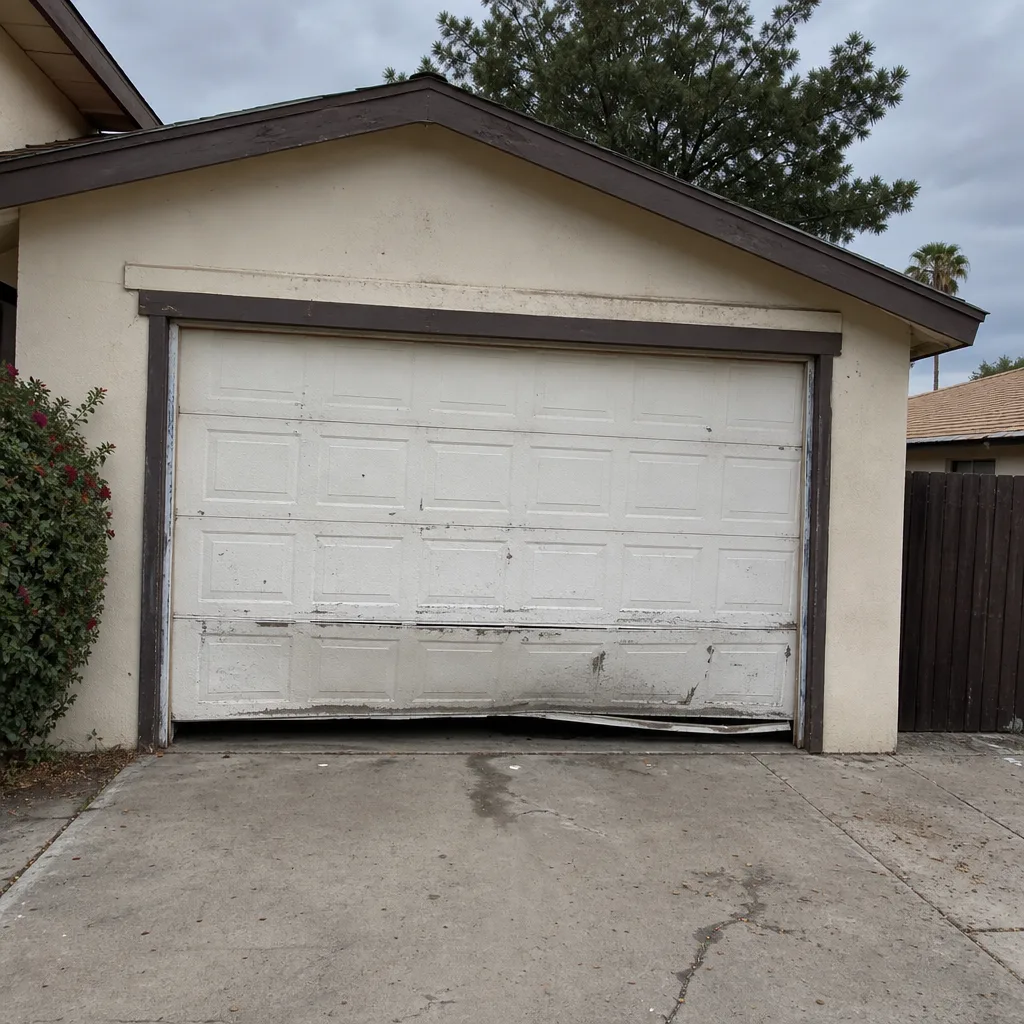 Before
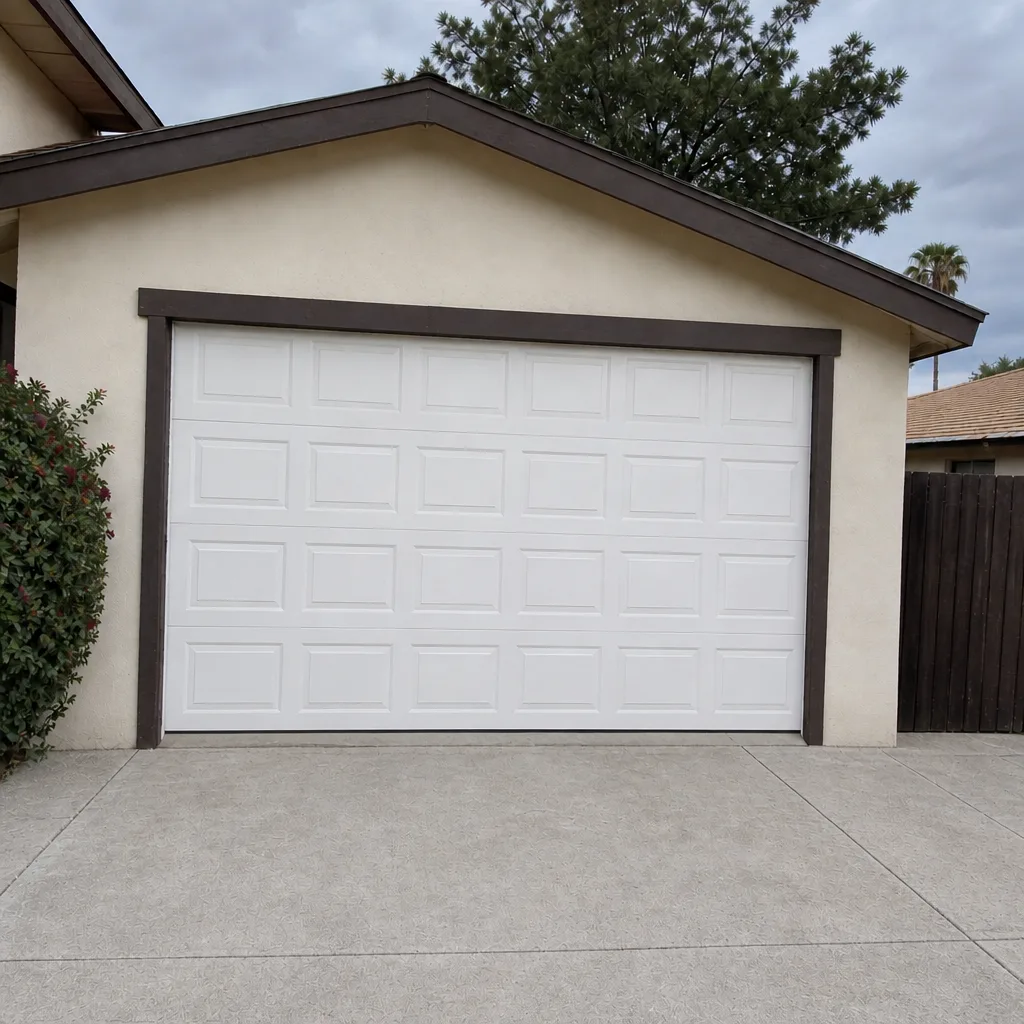 After
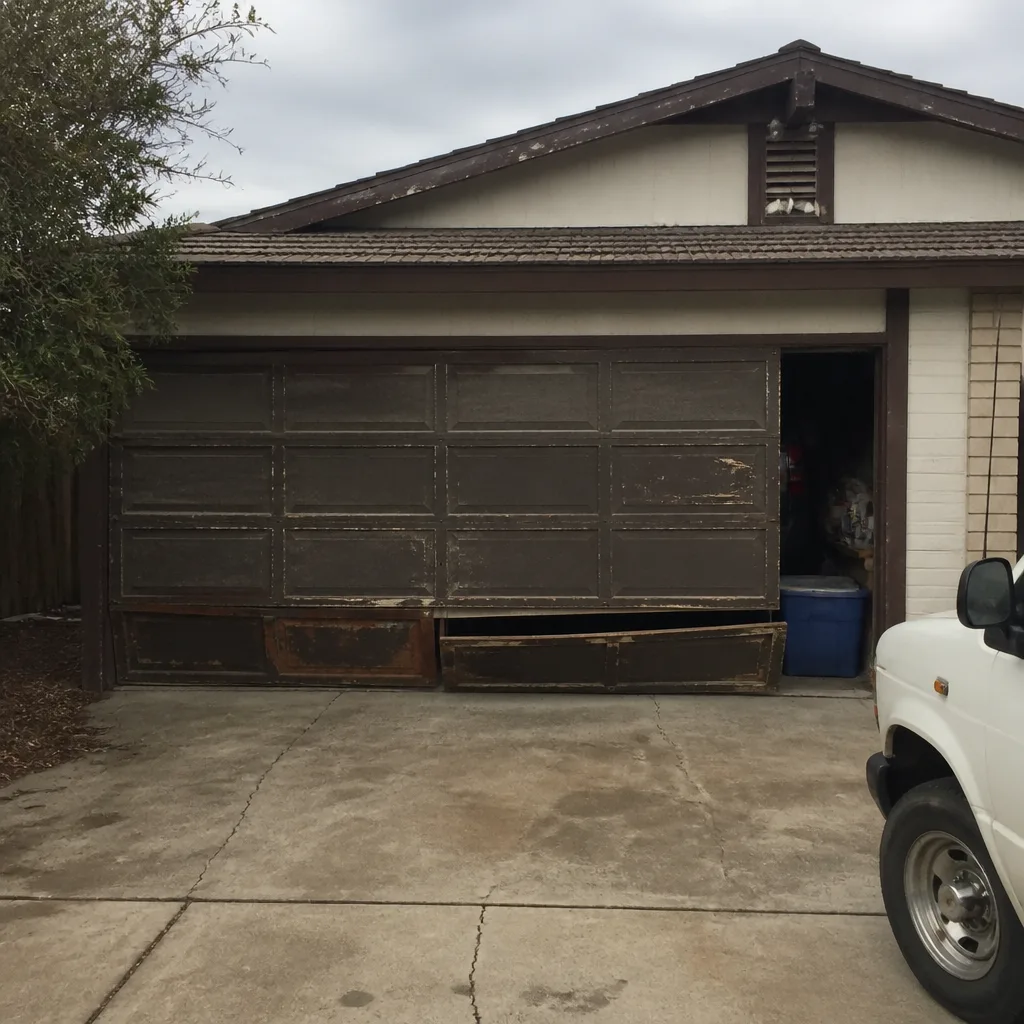 Before
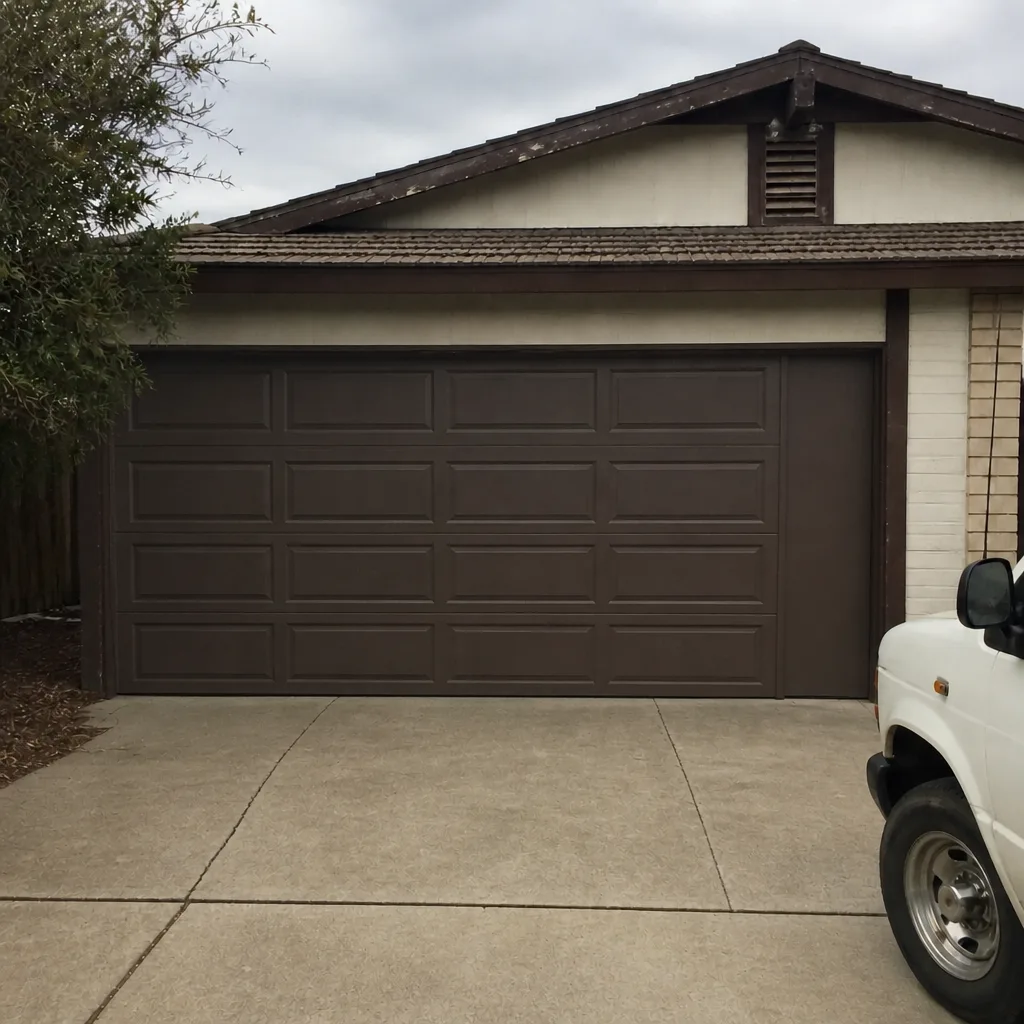 After
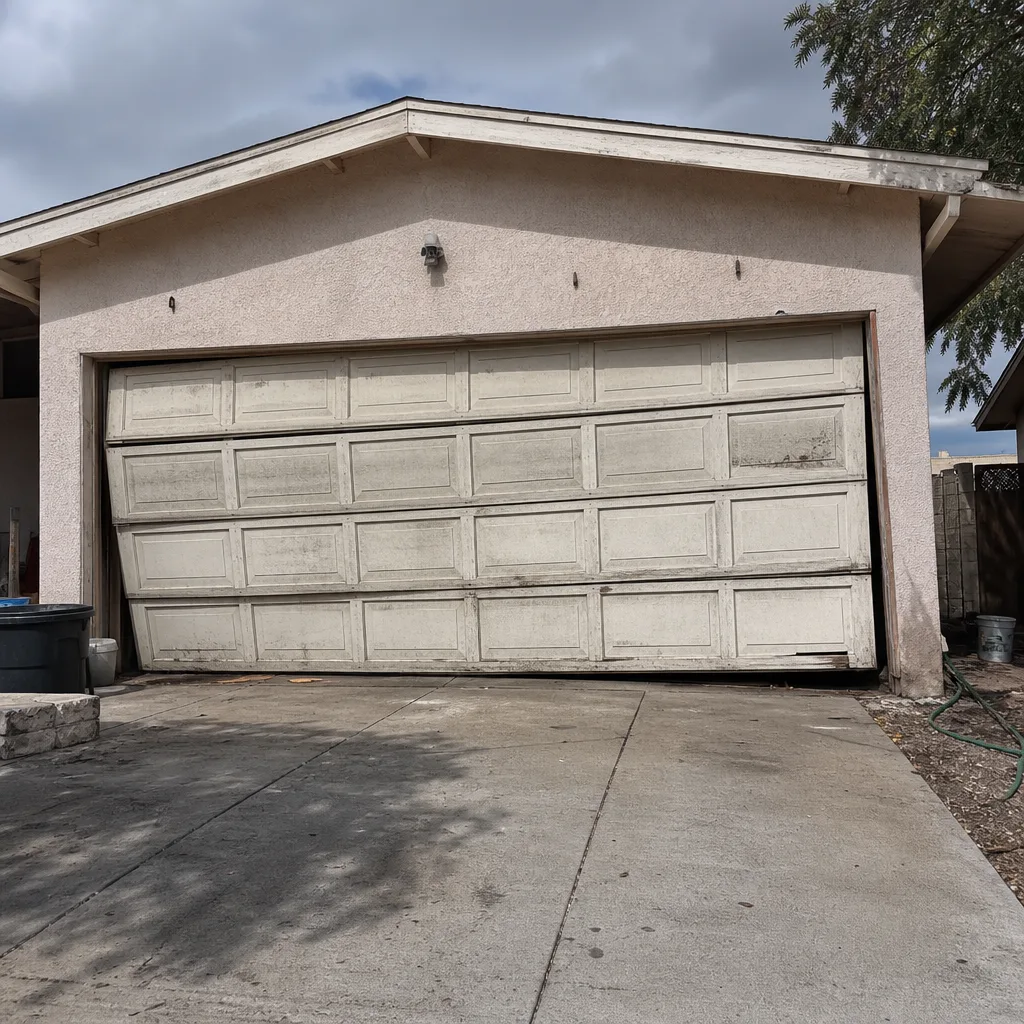 Before
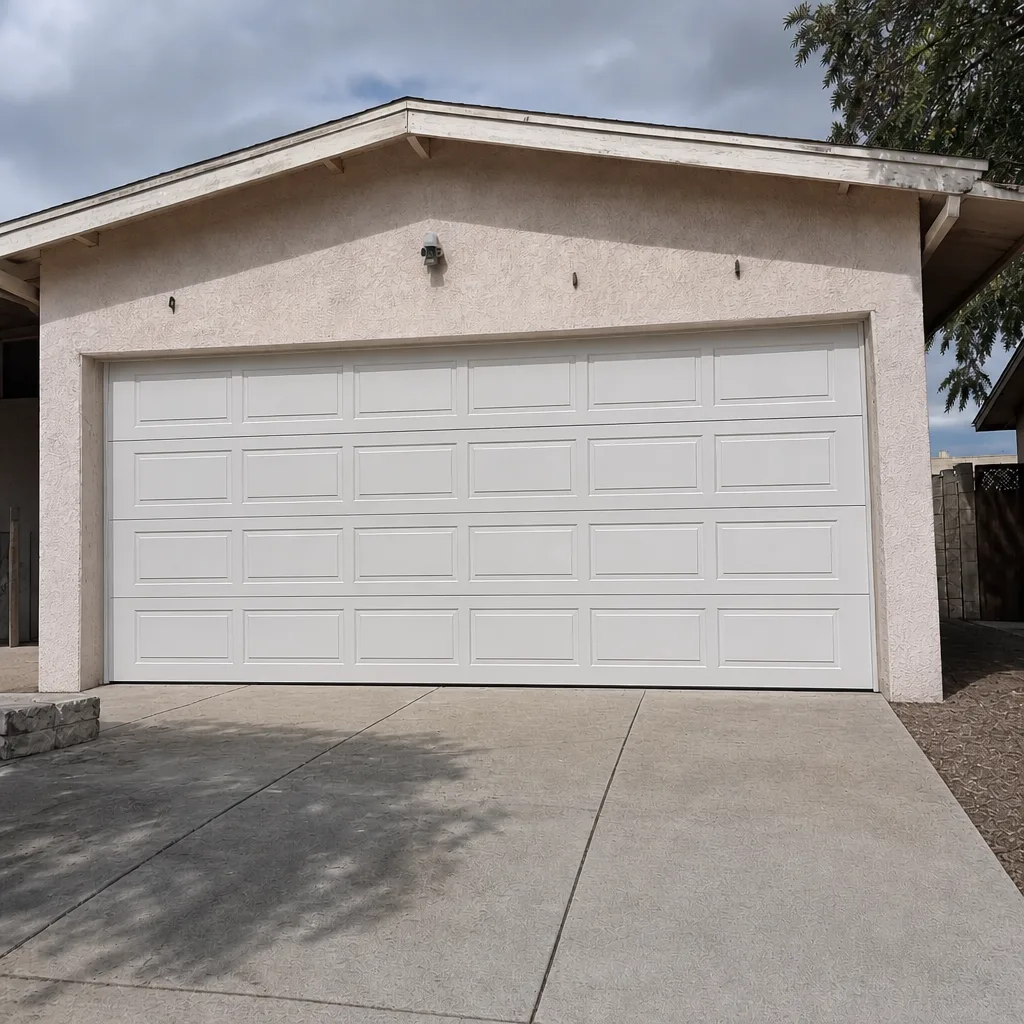 After
Frequently Asked Questions
Unplug the opener motor, then pull the manual release cord hanging from the trolley on the ceiling rail. Once the trolley is disconnected, lift the door by hand and secure it fully open. Never force the door while the motor is still engaged; the trolley has to be released or you’ll damage the opener rail.
Most likely, the opener’s thermal protection is tripping because the motor has overheated. Wait 20 to 30 minutes for it to cool and try again with a single press of the wall button. If the door stops at the same spot regardless of temperature, it’s a travel-limit or gear issue, and you should schedule a repair.
No. Garage door springs and cables store enough energy to cause serious injury, and they’re the one part of the door that’s genuinely not safe to work on yourself. If you see a snapped spring or hear a loud bang followed by a door that won’t open, keep everyone clear and call a technician. The repair is routine for us.
Almost always, the photo-eye safety sensors near the floor are coated in dust or misaligned. Wipe both lenses with a clean cloth, check that neither sensor’s LED is blinking, and clear anything in the beam path. If it still reverses after a clean-and-clear, the wiring or logic board needs a diagnosis.
No. The estimate is free and the price is set per job by the written estimate. We answer 24/7, and fast dispatch runs from 7am to 7pm, Sunday through Friday. Call (877) 490-7828 for details on your specific door.
We’re factory-familiar with eight of the most widely installed brands, including LiftMaster, Chamberlain, Genie, Clopay, Amarr, Wayne Dalton, Craftsman, and Raynor. That means whatever opener and door is on your home, we can diagnose it. Call (877) 490-7828 and we’ll tell you what’s involved.
The Bottom Line
Garage door emergencies in Glendale follow patterns, and the patterns are learnable. Power outages after a monsoon, heat-related opener stalls, and dust-coat sensor failures cause the vast majority of calls we get, and each one has a simple first response: unplug and manual-release the door, cool down the opener, or wipe the sensor lenses. Build the four-item kit, save the number, and know which defects are safe to leave for a scheduled repair and which need a call right away. When the spring snaps or the door goes off-track, don’t touch it; that’s a call to a trained technician, not a project for the weekend. If you’d like a professional to walk your door through a pre-season check, call (877) 490-7828. We answer 24/7, fast dispatch from 7am to 7pm, Sunday through Friday, and the estimate is free.
Written by the team at Pearl Garage Door Repair.