
Last updated November 15, 2026
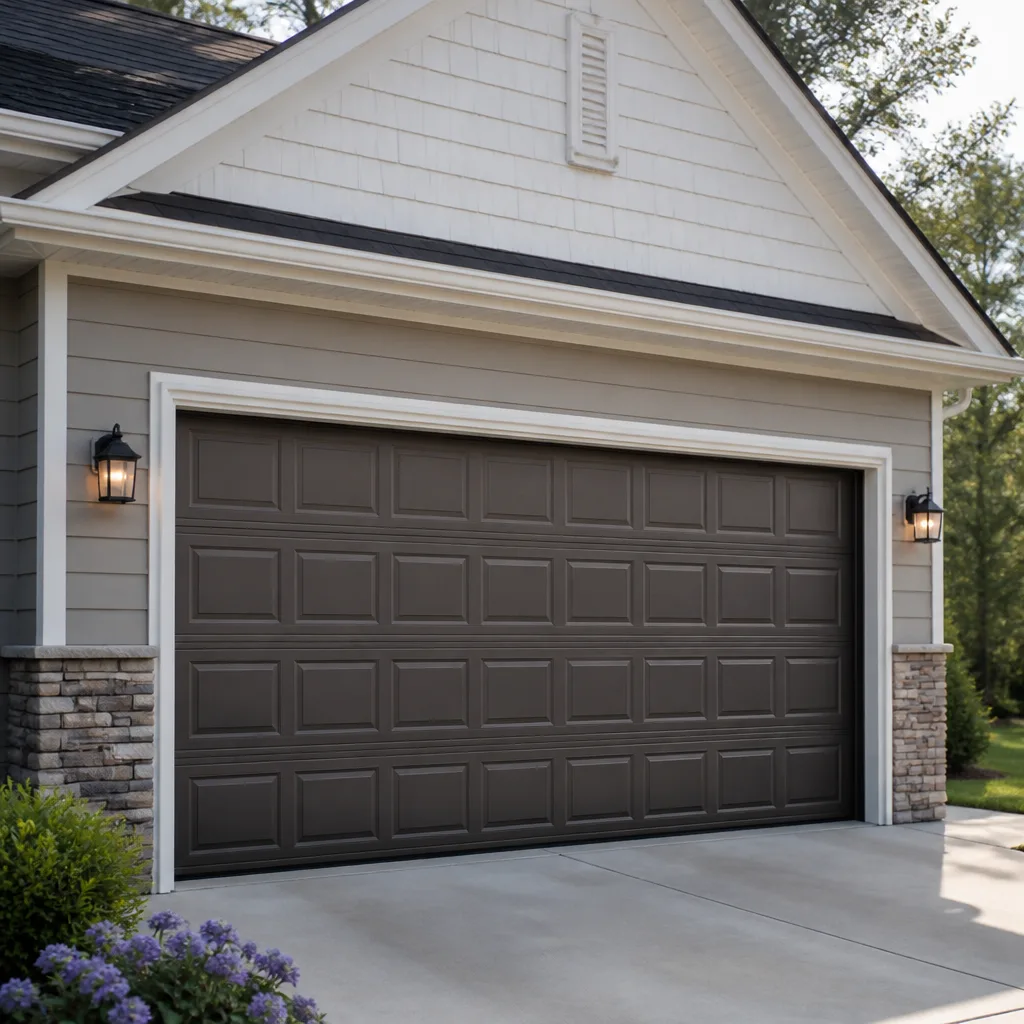 Raised-panel steel
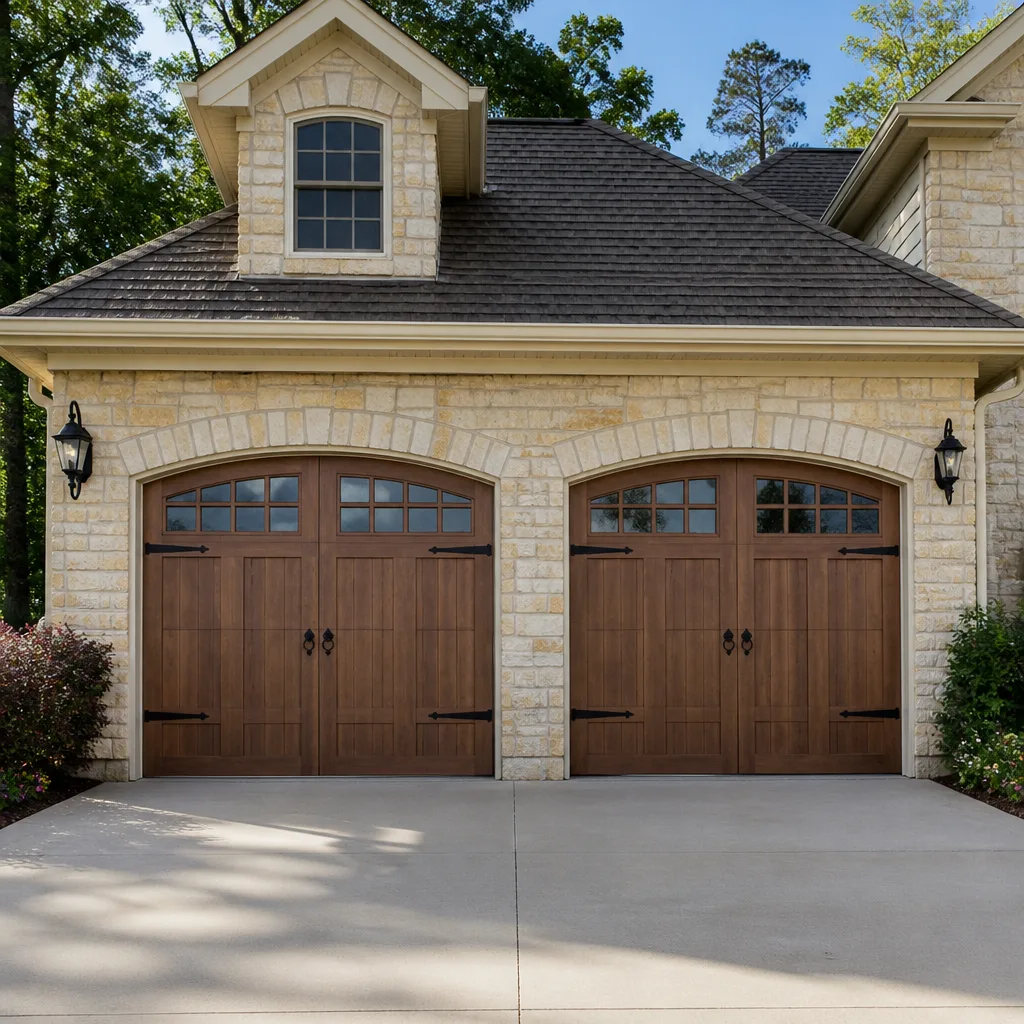 Carriage house
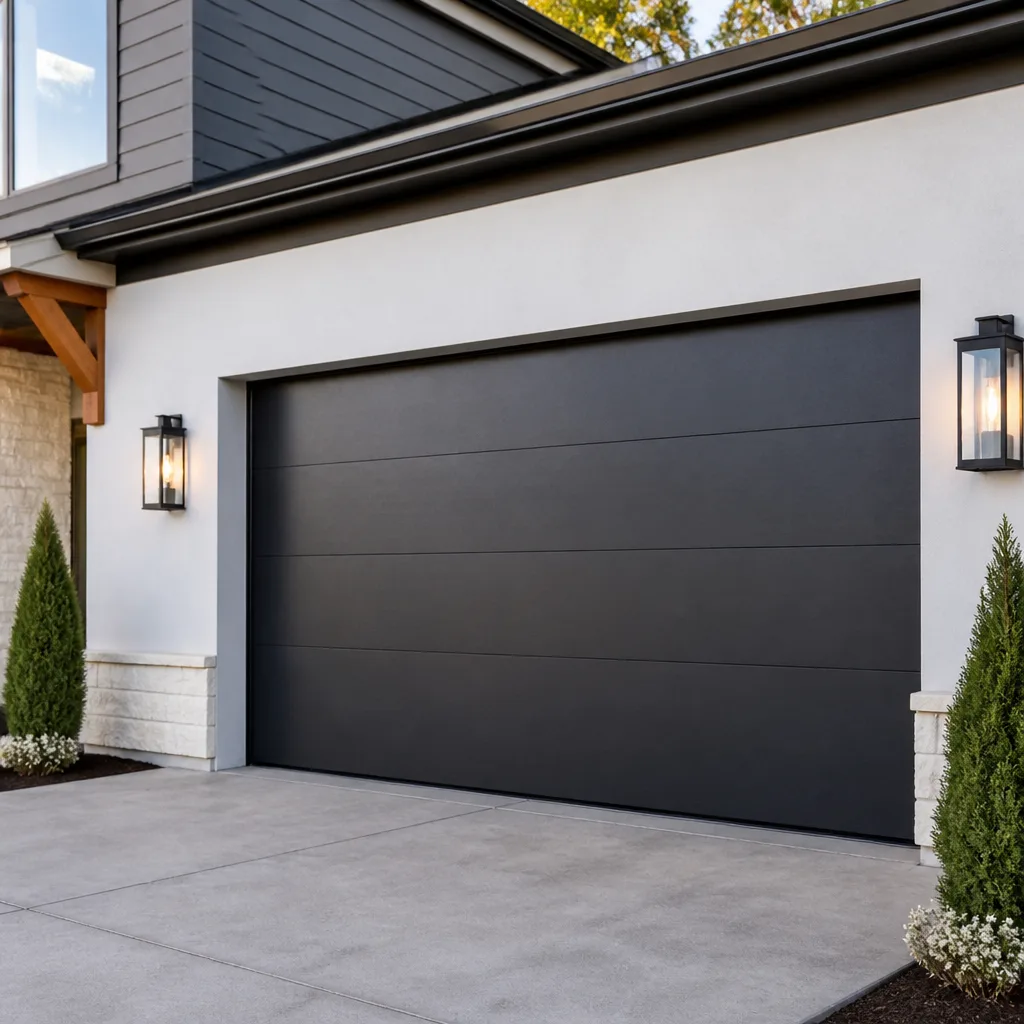 Modern flush
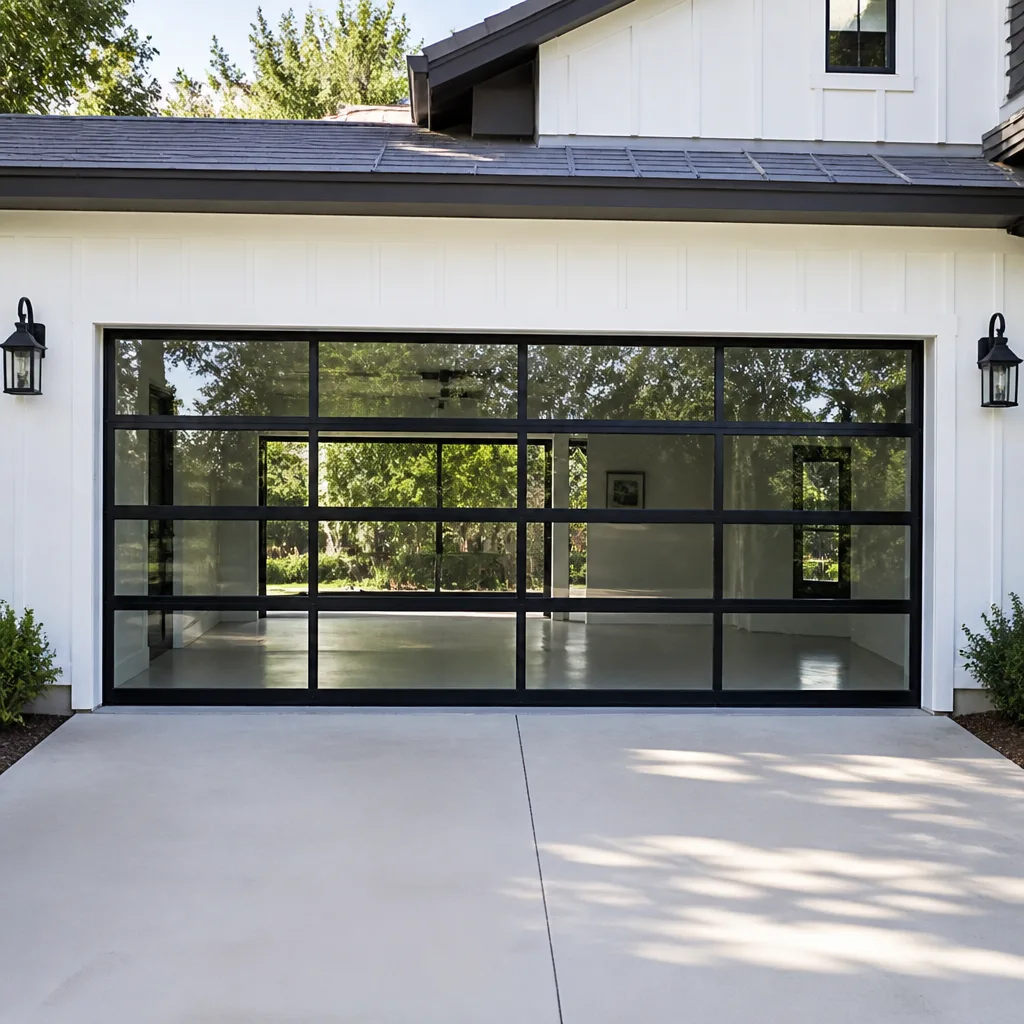 Full-view glass
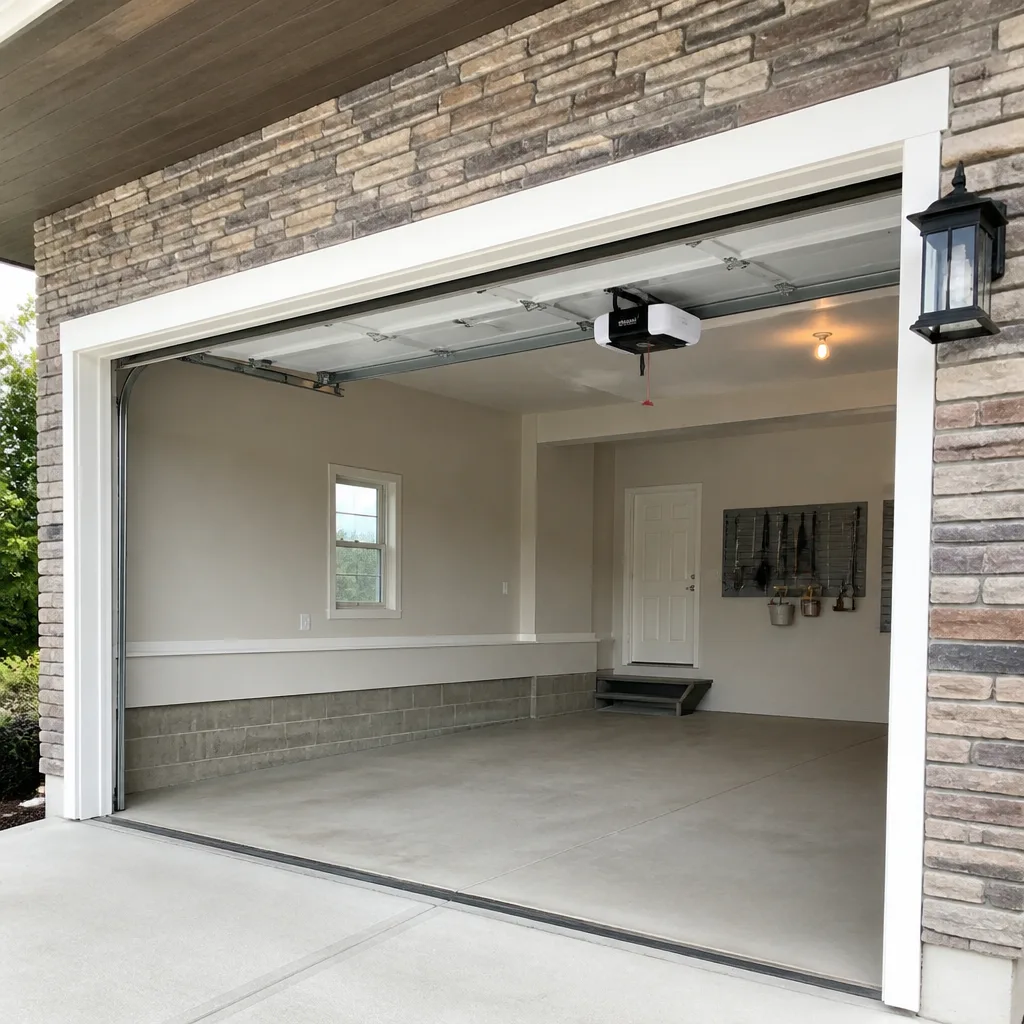 LiftMaster openers
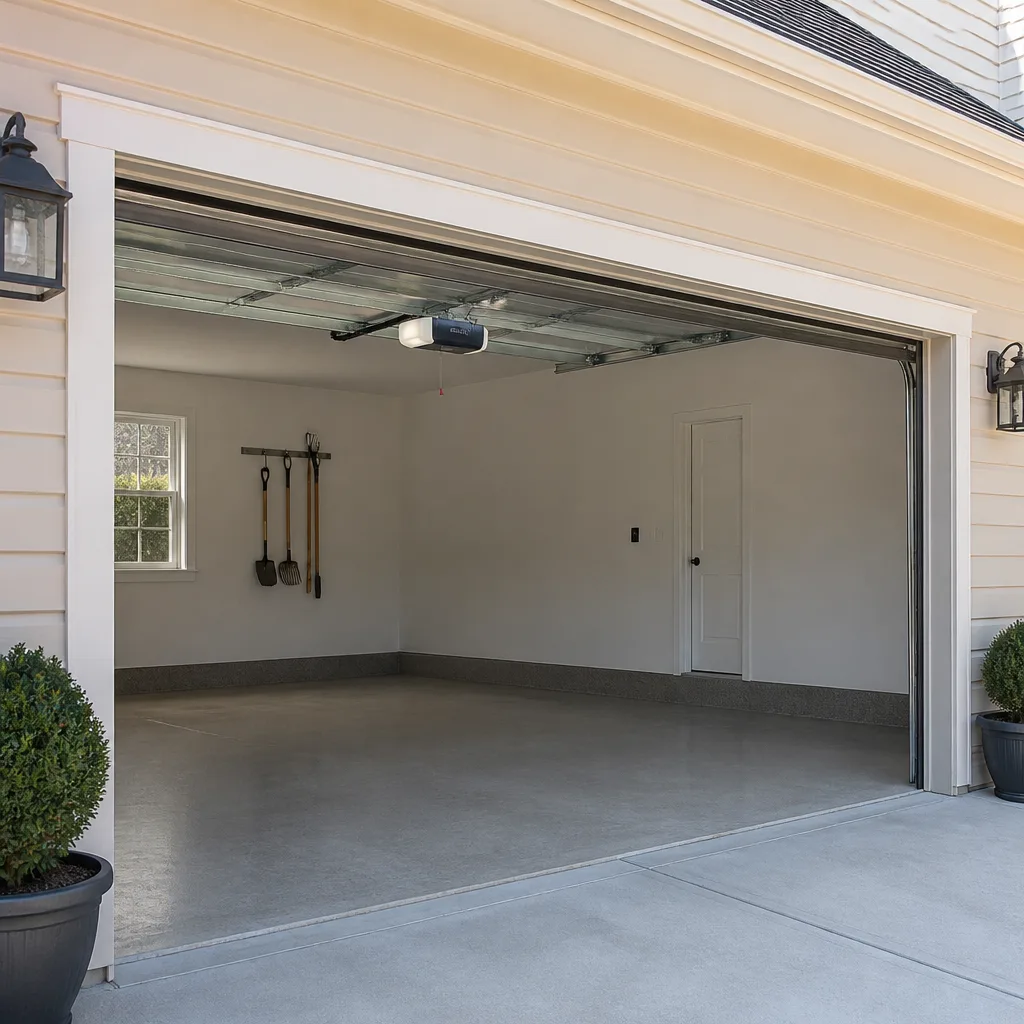 Chamberlain openers
Full 25-point door and opener safety check with every visit - springs, cables, rollers, tracks, and your LiftMaster or Chamberlain opener included
You get a price before we start. It does not change when the pro arrives.
Get your free estimateGarage Door Warning Signs: A Glendale Homeowner’s Reference Guide
A garage door doesn’t announce its failure. It schedules it. By the time a spring snaps or an opener gives up, the door has usually been telling you something for weeks, and most homeowners in Glendale walk past the message every single day on the way to the car. The signs that matter here aren’t the ones every guide lists. Desert heat, intense sun, and monsoon dust storms push a garage door system in ways that don’t happen in cooler climates, and the early warnings look different because of it. This guide covers the visual, sound, and operational signals we’ve learned to read on Glendale doors, plus a triage framework that tells you which ones to watch and which ones need a service call within 48 hours.
Quick Answer
Most garage door failures in Glendale are preceded by at least two diagnosable warning signs in the 30 to 60 days before the breakdown. The signs to watch for are UV damage on the door surface, heat-expanded gaps in the track, a bottom seal warped by monsoon dust, and changes in the sound or speed of the door’s cycle. Any single sign of grinding, popping, or partial reversal means the door should be inspected by a trained technician before it’s used again. Visual and cosmetic signs can usually be monitored; mechanical and safety-related signs cannot wait.
Styles & brands we work with
- Raised-panel steel
- Carriage house
- Modern flush
- Full-view glass
- LiftMaster openers
- Chamberlain openers
Table of Contents
- Visual Warning Signs: What Desert Exposure Does to Your Door
- Sound-Based Diagnosis: Squeak, Grind, or Pop
- Operational Warning Signs: When the Door Tells You Something Is Wrong
- The Monsoon Checklist: Track, Seal, and Bottom Rail
- The Triage Framework: Monitor, Schedule, or Call Now
- Opener Warning Signs Most Homeowners Miss
- When Age Is the Warning Sign
- Common Mistakes to Avoid
Visual Warning Signs: What Desert Exposure Does to Your Door
Sun damage on a garage door in Glendale is not cosmetic. The same ultraviolet load that fades a car’s paint in a few summers works on your door panels every day of the year, and what it does to the finish is a preview of what it’s doing to the structure underneath. We tell homeowners to look at three things: fading, chalking, and seam separation. They’re not the same problem, and they don’t carry the same urgency.
Fading
Fading means the pigment in the paint or the panel’s factory finish is breaking down. On a steel door, this is a surface-level problem at first. But a faded finish no longer reflects UV the way it was designed to, which means the panel underneath absorbs more heat and more radiation. A faded door is on a faster clock than a protected one. On Clopay and Amarr steel doors, which are common on Glendale homes, fading usually shows first on the south and west-facing panels, the ones taking the afternoon sun head-on.
Chalking
Chalking is the powdery film that comes off on your hand when you rub a faded panel. That powder is the finish itself, breaking down. Once a door is chalking, it’s no longer protecting the substrate, and on a steel door that means rust is next, even in a dry climate, because moisture collects in the seams and hardware holes where the finish has failed. Chalking is a monitor-and-maintain sign, not an emergency, but it’s the point where repainting or refinishing the door starts to make financial sense.
Seam Separation
Seam separation is where a visual sign turns structural. On a sectional door, the seams between the panel skins and the end caps are where the panel gets its rigidity. When those seams open up, even slightly, the panel loses strength. You can usually spot it by running a finger along the seam and feeling for a gap that wasn’t there before. On Wayne Dalton and Craftsman doors, seam separation often appears at the bottom panel first, because that’s the panel closest to the ground and the one most exposed to splash, dust, and the heat radiating off the driveway. A separated seam on a load-bearing panel is a schedule-a-service-call sign, because a panel that flexes under load can bind the whole door and wear the rollers and hinges prematurely.
Sound-Based Diagnosis: Squeak, Grind, or Pop
Your ears are the cheapest diagnostic tool you own, and most Glendale homeowners already know the door is making a new noise. They just don’t know which noise means what. Here’s the breakdown we use, in order of how urgently each one needs attention.
A Squeak Means Lubrication
A squeak is high-pitched and rhythmic, and it usually tracks with the movement of the door. It comes from metal-on-metal contact at the hinges, rollers, or the torsion bar bearings. A squeak is the least urgent warning sign on this list, but it’s not nothing. A hinge that squeaks today is a hinge that’s wearing faster than it should, and neglected lubrication turns a squeak into a grind over time. If the squeak is new and localized to one or two hinges, cleaning and lubricating those points with a garage-door-specific lubricant is a reasonable homeowner task. If the squeak comes back within a few weeks, something is misaligned and it needs a proper look.
A Grind Means Roller Wear
A grinding sound is lower, rougher, and it usually comes from the track or the rollers. Grinding means metal is being removed, and metal being removed is metal wearing out. On a Glendale door, grinding most often traces to rollers that have flat-spotted or lost their bearings, or to a track that’s been pushed slightly out of alignment by heat expansion. Grinding left alone accelerates: worn rollers put more load on the hinges, worn hinges put more load on the panels, and the whole system starts to fail as a chain rather than a single part. A grind is a schedule-a-call sign.
A Pop Means Spring Fatigue
A pop is the one sound that should stop you from using the door. A torsion or extension spring under load stores an enormous amount of energy, and a pop is often the sound of a spring that has shifted, slipped a winding, or fatigued to the point where the next cycle could be its last. A popped or broken spring is a genuine safety hazard. Never try to wind, unwind, or remove a spring yourself; the stored energy can cause serious injury even to experienced hands. Call a trained technician. If you hear a pop and the door still moves, leave it closed and call for service before it cycles again.
Operational Warning Signs: When the Door Tells You Something Is Wrong
The door’s behavior during a normal cycle is a running diagnostic. Three changes in behavior cover most of what we see on Glendale doors: slow open cycles, partial reversal, and remote lag. Each one points at a different part of the system, and mixing them up is the most common reason homeowners replace the wrong component.
Slow Open Cycles Point at the Opener
If the door is opening and closing more slowly than it used to, and the door itself moves smoothly when you disconnect the opener and lift it by hand, the problem is almost always in the opener, not the door. A slow cycle can mean a failing drive gear, a motor that’s overheating because it’s working harder than it should, or a worn belt or screw drive. In Glendale, where the garage can hit extreme internal temperatures in summer, opener electronics are especially prone to heat-related slowdowns. If the door is stiff by hand too, the problem is mechanical and the opener is just compensating.
Partial Reversal Points at the Sensors
A door that goes down partway and then reverses is usually telling you the safety sensors are obstructed, misaligned, or failing. The sensors are the two small eyes at the base of the track, and they exist to stop the door from closing on a person, pet, or object. In Glendale, dust and cobwebs from monsoon season are the most common cause of a sensor trip. Clean the lenses, check that the indicator lights on both sensors are solid, and make sure nothing has bumped them out of alignment. If the sensors are clean, aligned, and the door still reverses, stop using the door and call for service. A door that reverses unpredictably is a safety problem.
Remote Lag Points at the Opener or the Remote
If you have to hold the remote closer, press it more than once, or the door responds only from certain angles, the problem is usually the remote’s battery, the opener’s antenna, or interference from LED bulbs or nearby electronics. Start with the battery. If a fresh battery doesn’t fix it, the issue is likely in the opener’s radio board or the wall control wiring. Remote lag is rarely urgent, but it’s a sign the opener is aging, and it’s worth having looked at before it turns into a no-response problem.
The Monsoon Checklist: Track, Seal, and Bottom Rail
Monsoon season is the one time of year when a Glendale garage door takes a concentrated beating. Dust storms drive fine grit into every gap, and the rain that follows turns that grit into a paste that works its way into moving parts. The door usually survives. The track, threshold seal, and bottom rail often don’t come through clean. Here’s the checklist we recommend after any significant dust storm or monsoon event.
- Inspect the track for grit and heat-expanded gaps. Run a rag along the inside of both vertical tracks and the horizontal track curve. Fine desert dust acts like an abrasive on the rollers, and heat expansion can open small gaps at the track brackets. If the door wobbles or shudders as it passes a specific point, that’s a track alignment issue.
- Check the bottom seal for warping and gaps. The bottom seal is the rubber strip on the lowest edge of the door. Monsoon heat and blowing dust warp it, and a warped seal leaves gaps that let in dust, water, and pests. Look for sections that have pulled away from the retainer or flattened out.
- Examine the bottom rail for rust and separation. The bottom rail is the metal channel that holds the bottom panel together. It’s closest to the ground, which means it takes the most splash. Surface rust is common and manageable; rust that’s eating into the rail structure is a replacement sign.
- Test the door by hand. Disconnect the opener and lift the door halfway. It should move smoothly and stay put when you let go. A door that feels heavy, binds, or drifts down is telling you something in the spring or track system has shifted.
- Look for dust intrusion inside the garage. A visible dust trail along the bottom of the door or the side jambs is a sign the seals have given up.
Anything on this list that shows up as a gap, a warp, or a bind is worth a service call. The seals themselves are inexpensive to replace, and catching a track problem early prevents the roller and hinge wear that follows.
The Triage Framework: Monitor, Schedule, or Call Now
The hardest part of garage door maintenance for most homeowners isn’t spotting the sign. It’s deciding what to do with it. We use a three-tier framework on every Glendale door, and it’s simple enough that any homeowner can apply it. The tier is determined by whether the sign affects safety, whether it’s getting worse, and whether the door still functions normally.
Tier 1: Monitor and Maintain
These are the cosmetic and slow-moving signs. Keep an eye on them and address them at your next service visit.
- Fading paint or finish
- Light surface chalking
- A single new squeak at a hinge
- Occasional remote lag that a fresh battery fixes
- Minor surface rust on the bottom rail
Tier 2: Schedule a Service Call
These signs mean a component is wearing out and the problem will get worse. Book a visit before the wear spreads to related parts.
- Seam separation on a panel
- A consistent grinding sound from the rollers or track
- A door that opens or closes noticeably slower than it used to
- A warped bottom seal or visible dust gaps
- Track wobble or shudder at a specific point
- Remote lag that a fresh battery doesn’t fix
Tier 3: Call Now (Within 48 Hours)
These are the safety and structural signs. Stop using the door and call for service.
- A pop, snap, or bang from the spring system
- A door that is visibly sagging on one side or hanging crooked
- A door that reverses unpredictably even with clean, aligned sensors
- A door that has come off one track or is binding hard
- A broken spring, whether or not the door still opens
- Any door that won’t stay up when lifted by hand
For any Tier 3 sign, keep the door closed, keep people and vehicles clear of it, and call garage door repair. The 48-hour window matters because a failing spring or binding track puts stress on the opener every time it cycles, and a small repair can turn into a larger one fast.
Opener Warning Signs Most Homeowners Miss
The opener is the part of the system most homeowners notice last. It’s mounted overhead, it doesn’t get looked at, and it only announces itself when it stops working. But an opener in trouble gives plenty of advance warning, and on a Glendale door the signals show up in specific patterns. We work on the eight brands we see most on Arizona homes, including LiftMaster, Chamberlain, Genie, Clopay, Amarr, Wayne Dalton, Craftsman, and Raynor, and the warning signs are similar across all of them.
- Straining sounds. If the opener sounds labored, it’s working harder than it should. That’s often because the door itself has gotten heavy, not because the opener is failing. Have both checked together.
- Inconsistent travel. If the door doesn’t fully open or close without stopping short, the travel limits need adjustment or the sensors are tripping. Don’t ignore a door that stops short, because a door that closes only partway isn’t securing the garage.
- Lights that flicker or stay on. The opener’s built-in lights are a rough health indicator. Flickering or lights that won’t turn off can signal a failing control board.
- No response from the wall control. If the remote works but the wall button doesn’t, or vice versa, the problem is usually wiring or a control board, not the motor.
- Overheating in summer. Glendale garages get hot. An opener that works fine in the morning and fails by afternoon may be overheating, which is a service sign, not a remote sign.
If you’re seeing opener symptoms, have the whole system looked at together. A door-and-opener inspection catches cases where a failing door is quietly burning out the opener, so you fix the cause instead of replacing the symptom. That’s what our garage door opener repair visit covers: the electronics, the drive, and the door itself, so the diagnosis is complete rather than a guess at one part.
When Age Is the Warning Sign
Sometimes the warning sign isn’t a symptom at all. It’s the door itself getting old. A garage door system has a service life, and when a Glendale door hits the far end of it, you start seeing a cluster of Tier 1 and Tier 2 signs at once rather than one at a time. That cluster is its own signal.
What that looks like in practice: the door needs lubrication every month instead of twice a year, the rollers are being replaced more often than the hinges, the opener has been repaired once and is limping, the finish has chalked past the point of repainting, and the bottom rail has rusted through once already. No single item on that list is a crisis. Together, they’re telling you the system is at the end of its useful life, and you’re spending money on repairs that would go further toward a new door.
This is where brand neutrality matters. We work on Clopay, Amarr, Wayne Dalton, Craftsman, and the other brands we know, and we don’t have a favorite. If a replacement makes sense, the right door is the one that fits your home, your opening, and your budget, not the one the technician is incentivized to sell. If a full replacement doesn’t make sense, we say so, and we repair what’s there. You can read more about our full range of work on the Pearl Garage Door Repair page, or if you’re nearby, on our Glendale page. The beauty of a full-lifecycle approach is that the recommendation is based on the door you actually have.
Common Mistakes to Avoid
A lot of the damage we see on Glendale doors was avoidable with better decisions earlier. These are the mistakes that come up most often.
- Waiting for the door to stop working. In our experience, the difference between a repair and a replacement is usually how long the homeowner waited after the first warning sign. A grinding roller is a roller replacement; a grinding roller ignored for a year is a hinge, panel, and track problem.
- Treating a cosmetic sign as proof the door is fine. A faded or chalking door can look solid and still be losing panel integrity underneath. Fading is a durability signal, not a finish signal.
- Using the wrong lubricant. White grease, cooking spray, and WD-40 are the three we see most. They attract dust, which is exactly what you don’t want on a door in Glendale. Use a garage-door-specific lubricant and use it sparingly.
- Adjusting the opener to compensate for a heavy door. If the door is binding or the springs are fatigued, turning up the opener’s force limit pushes the system harder and wears it out faster. Fix the door, not the opener’s sensitivity.
- Ignoring a bottom seal during monsoon season. A warped seal lets in the dust and grit that wears the rollers. The seal is one of the cheapest parts on the door and one of the most important.
- Handling spring repairs yourself. This is the mistake that ends in injury. Springs are under enormous tension, and a single slip can cause serious harm. Leave spring work to a trained technician, without exception.
- Skipping a professional look after a big dust storm. The track and seal take the hit in a monsoon, and a quick check after the storm catches small problems before the next cycle turns them into big ones.
When to Call a Professional
Call a professional for any Tier 3 sign: a pop or snap from the spring system, a door that reverses unpredictably, a door hanging crooked or off track, or a door that won’t stay up when you lift it. Call for Tier 2 signs too, ideally within a week or two, before the wear spreads to related components. And call if you’re simply not sure which tier a symptom belongs to, because an inspection is the cheapest way to find out. Pearl Garage Door Repair offers free estimates in Glendale. Call (877) 490-7828. We answer 24/7, and fast dispatch runs from 7am to 7pm, Sunday through Friday.
See the difference
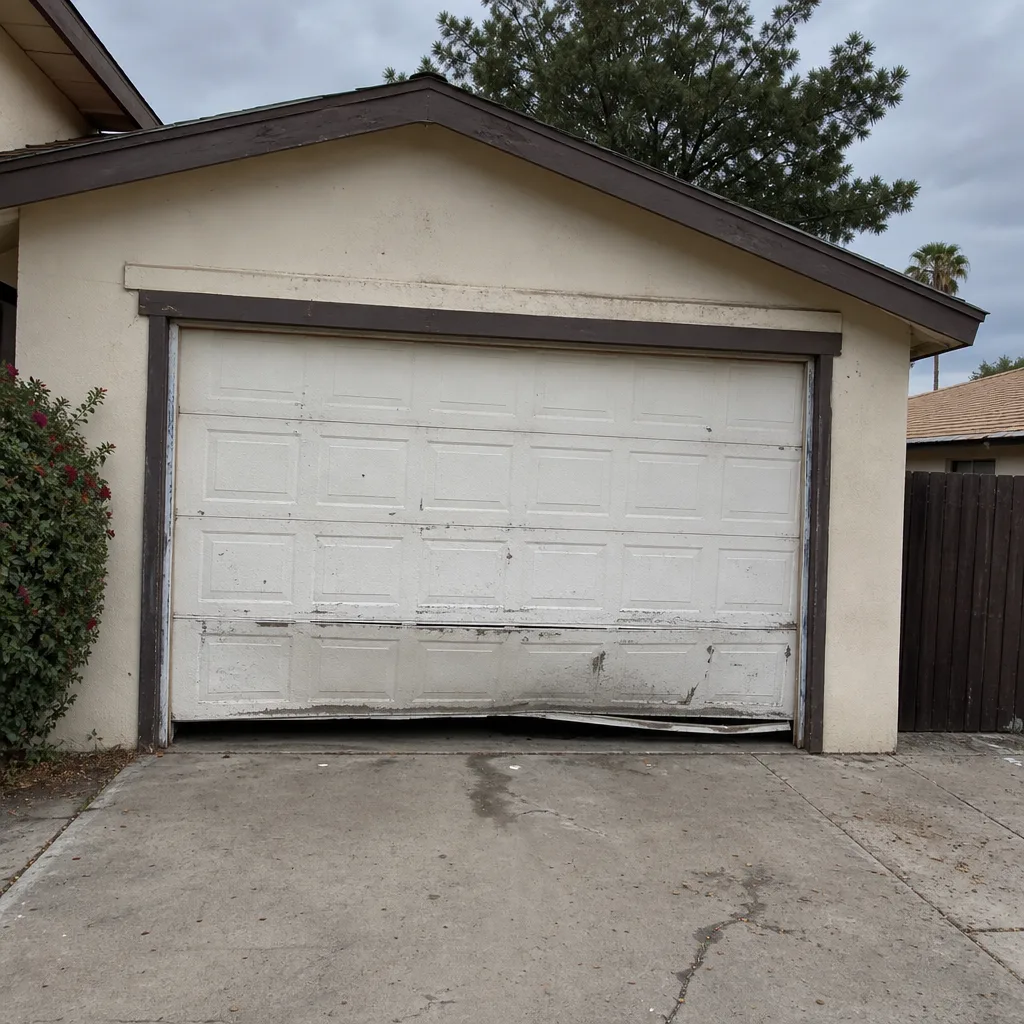 Before
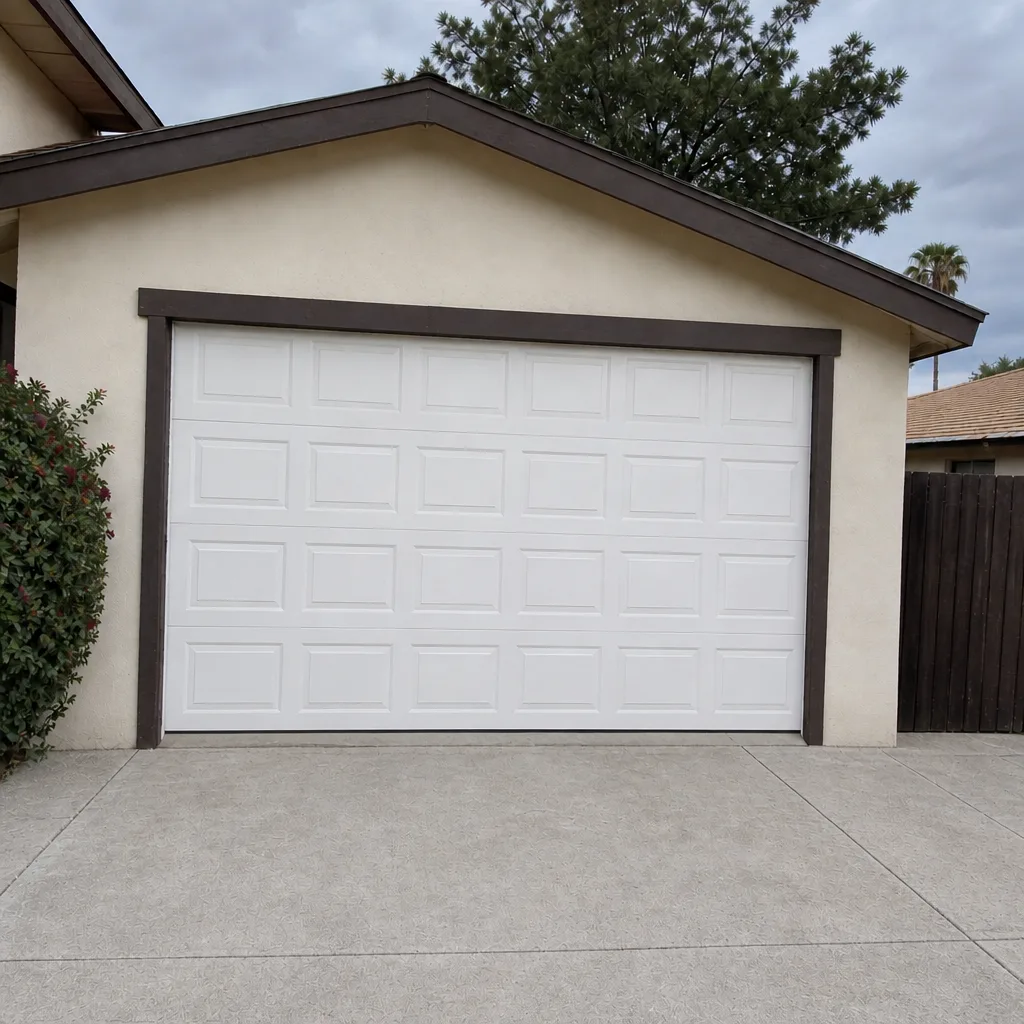 After
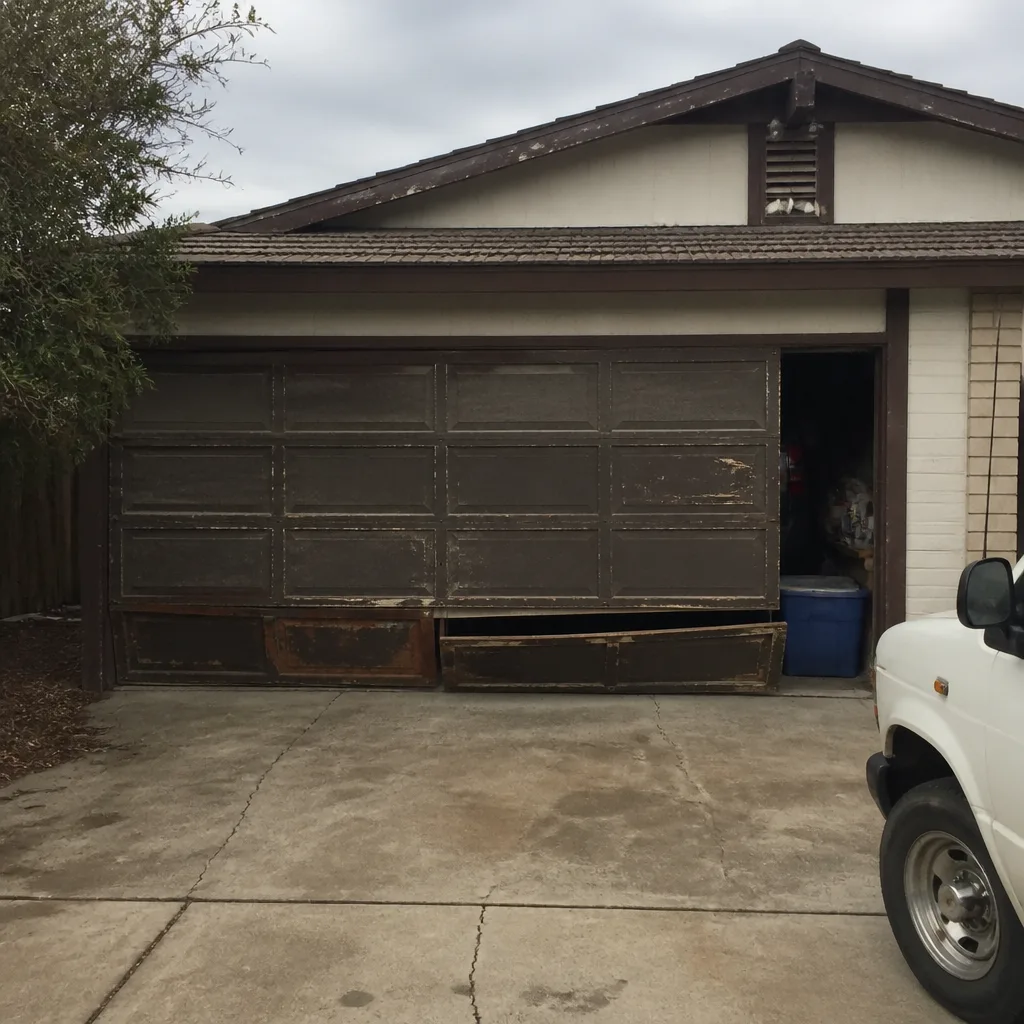 Before
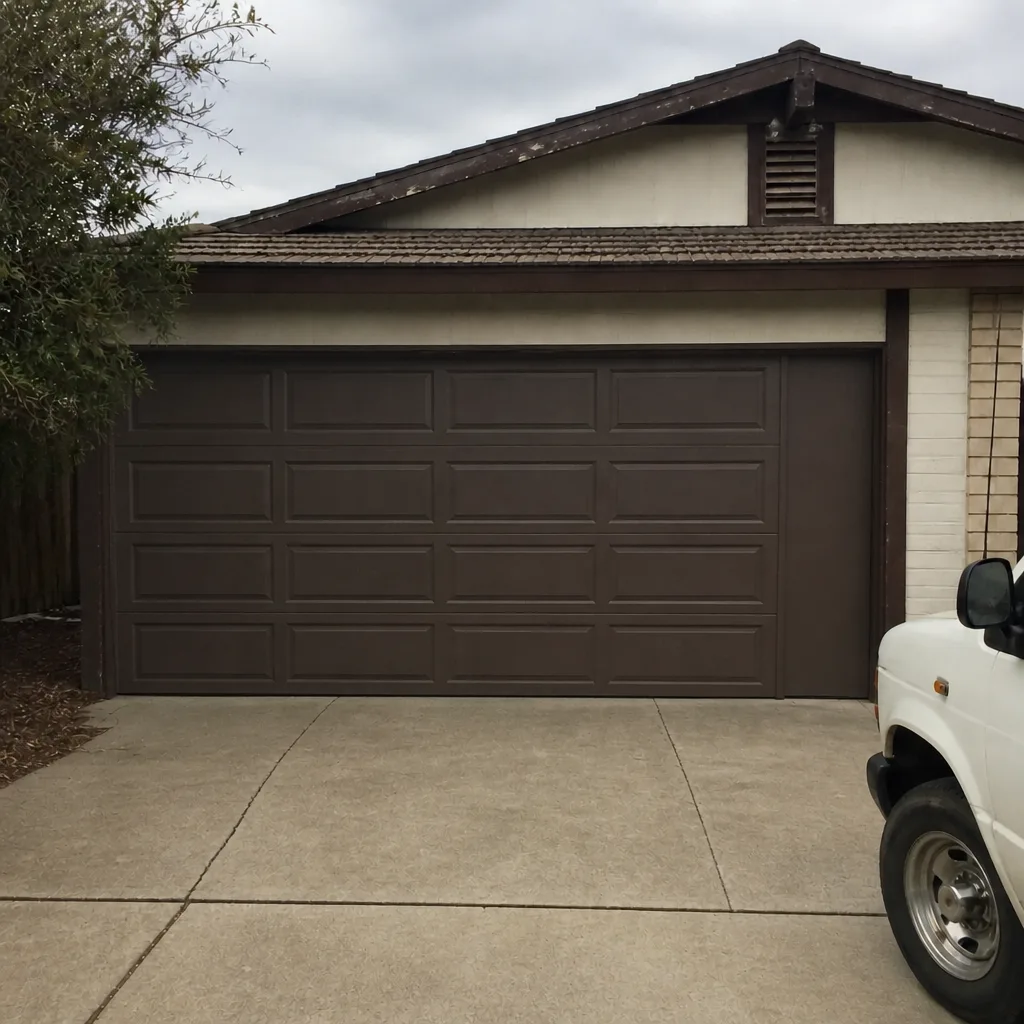 After
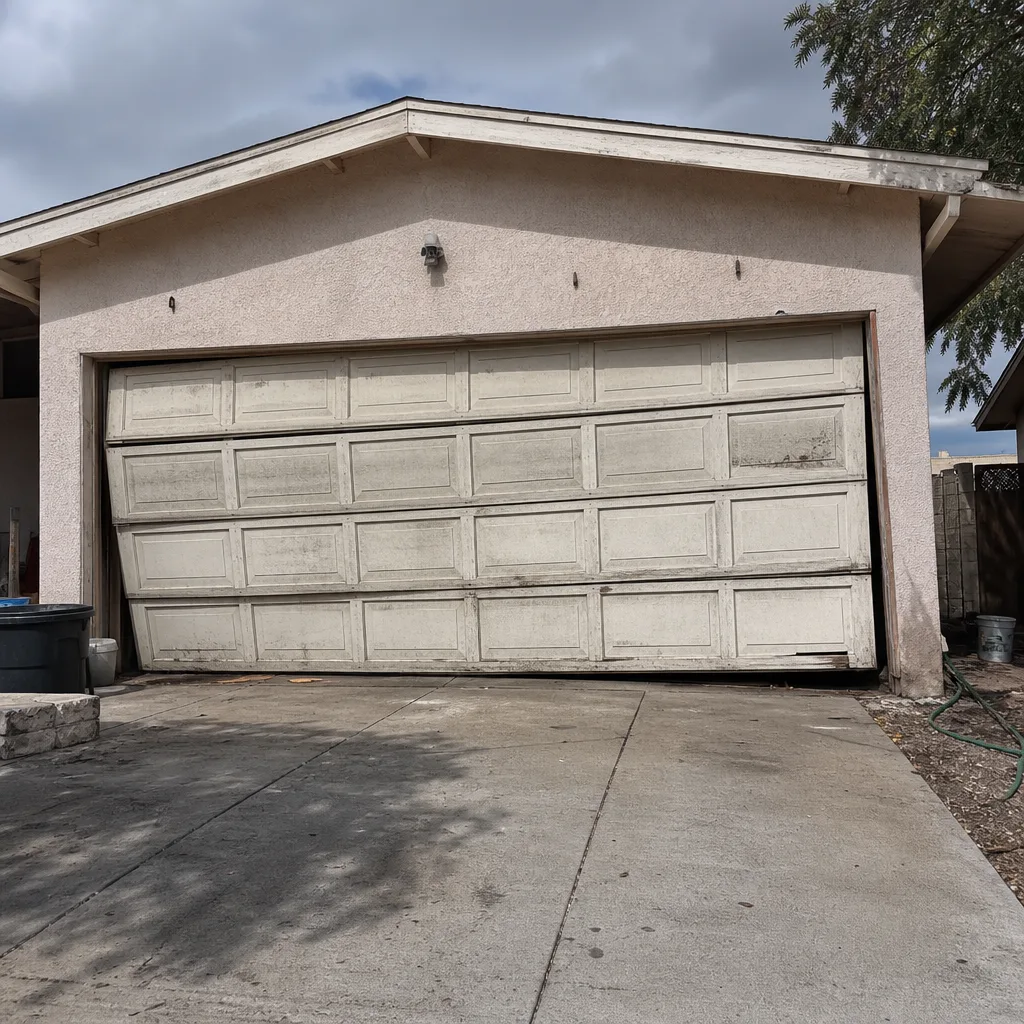 Before
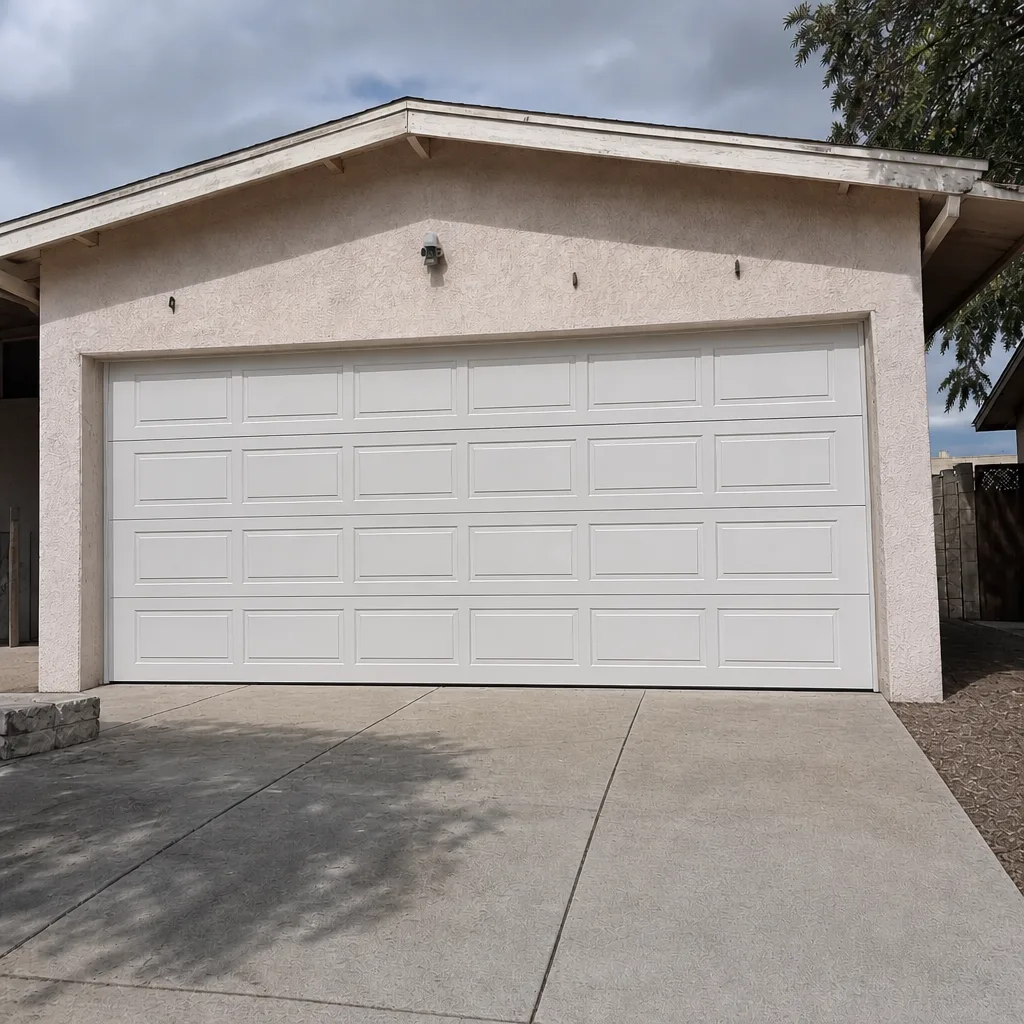 After
Frequently Asked Questions
The main warning signs are a pop or bang from the spring area, a door that suddenly feels much heavier when lifted by hand, a door that won’t stay up when you let go halfway, and a visible gap or separation in the coiled spring. Any of these means the spring should be inspected by a trained technician before the door is cycled again. Springs are under high tension and should never be adjusted or removed by a homeowner. Call (877) 490-7828 for a free estimate, and we’ll come out to look at the spring and the rest of the system together.
Grinding in a Glendale door usually traces to worn rollers or a track that’s been pushed slightly out of alignment by heat expansion. Desert dust working into the track accelerates roller wear, and the grind is the sound of metal being abraded. It’s a schedule-a-call sign, not an emergency, but it gets worse and it tends to spread to the hinges and panels. Call (877) 490-7828 to book an inspection; estimates are free.
After a dust storm, check the track for grit, the bottom seal for warping or gaps, and the bottom rail for rust. Test the door by disconnecting the opener and lifting it by hand; it should move smoothly and stay put. If the door binds, wobbles at a specific point, or you can see dust trails along the bottom, book a service call. Call (877) 490-7828 and we’ll take a look.
A single new squeak is usually a lubrication issue and can be addressed by cleaning and lubricating the affected hinge or roller with a garage-door-specific lubricant. A squeak that comes back within a few weeks, or one that’s spread to several hinges, means something is misaligned. Call (877) 490-7828 if the noise returns after lubrication; the fix is usually quick.
A door that reverses partway down is almost always alerting you to obstructed, misaligned, or failing safety sensors at the base of the track. Clean the sensor lenses, check that both indicator lights are solid, and make sure nothing has bumped them out of alignment. If the door still reverses with clean, aligned sensors, stop using it and call for service; a door that reverses unpredictably is a safety problem. Call (877) 490-7828 for a diagnostic visit.
Yes, Glendale heat and UV exposure are the main drivers of the visual and mechanical wear we see on local doors. Sun bleaches the finish, chalking breaks down the protective layer, heat expansion opens gaps in the track, and the high temperature inside a garage stresses opener electronics. A door that gets checked seasonally, especially before and after summer, lasts longer and fails less often. Call (877) 490-7828 to book a seasonal inspection; estimates are free.
The Bottom Line
Garage door failures in Glendale are usually scheduled, not sudden. The signs that matter are the desert-specific ones: faded and chalking finish, seam separation on a load-bearing panel, heat-expanded track gaps, and a bottom seal warped by monsoon dust. Pair those visual signals with the sound-based diagnosis (squeak means lubrication, grind means roller wear, pop means spring fatigue) and the operational signs (slow cycles, partial reversal, remote lag), and you have a full picture of what your door is telling you. Use the triage framework to decide what to monitor and what to call on, and never handle spring work yourself. If you’re seeing a Tier 2 or Tier 3 sign, or you just want a professional look at the door before summer, we’re here.
Contact
Whether you’re hearing a new grind, noticing a warped seal after a dust storm, or just want a seasonal check on a door that’s been making you think twice, we can help. Pearl Garage Door Repair offers free estimates in Glendale and handles repair, opener service, and full installation under one name, so you don’t have to track down a second company for the opener or the door. Call (877) 490-7828. We answer 24/7. Fast dispatch from 7am to 7pm, Sunday through Friday.
Written by the team at Pearl Garage Door Repair.